Get Full Government Meeting Transcripts, Videos, & Alerts Forever!
Get email alerts on the Development Standards topic
No spam. Unsubscribe anytime.
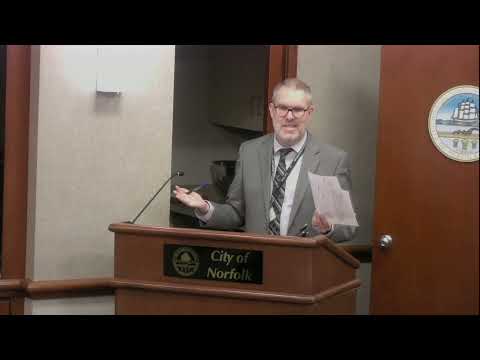
Planning staff previews major code cleanup aimed at simplifying renovation and addition rules
Summary
Staff described a multi‑phase rewrite of development standards to consolidate renovation/addition rules, clarify the 50% substantial‑improvement triggers, and update parking, refuse and landscaping standards. The work is intended as a Phase 1 reorganization with later rounds on resilience and additional fixes.
Planning staff outlined a multi‑phase cleanup of the city's development standards intended to make renovation and addition rules clearer and to avoid inadvertently forcing property owners into full code retrofits when modest work is proposed.
The Phase 1 package would create a new consolidated section addressing renovations, additions and site improvements; clarify when an improvement triggers the existing 50% substantial‑improvement standard; and add explicit language for refuse containers and screening. For single‑family, duplex and townhouse additions the draft would allow simpler addition‑specific standards (for example, additional planting strips or modest porch standards) while preserving setback, height and floodplain protections.
For multifamily and nonresidential projects staff said substantial improvements would still generally trigger full compliance, but they also flagged follow‑on work to consider tailored approaches. Staff noted a recent state law change that reduces some residential minimum parking requirements near fixed‑route transit stops (which may lower required parking ratios in many parts of the city) and proposed a consistent 8x18 standard for parking in front of detached garages.
Why it matters: the rewrite is intended to keep existing buildings viable for incremental upgrades rather than forcing demolition or full replacement when owners make modest investments. Staff emphasized this is Phase 1 — future phases will address resilience metrics and additional technical corrections.
Next steps: staff will circulate draft text to commissioners and stakeholders, then present the edited language at an upcoming public hearing as part of the planning calendar.
Ending: Commissioners asked clarifying questions about how additions are defined, how the 50% rule is applied, and where the next, more technical rounds will focus; staff said it will return with updated draft language and outreach materials.