Get Full Government Meeting Transcripts, Videos, & Alerts Forever!
Get email alerts on the Streetscape topic
No spam. Unsubscribe anytime.
Harbor Springs streetscape survey shows preference for preserving character; public splits over bump-outs and lane narrowing
Summary
Consultant Tim Knudson told the DDA that 160 survey responses favored preserving downtown character and prioritizing pedestrian safety and lighting; public comment was extensive and divided, with residents split between incremental infrastructure fixes and objections to lane narrowing and some curb-extension ideas.
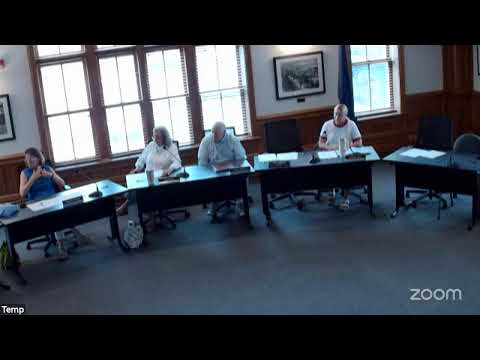
A consultant’s midway report on a proposed Harbor Springs downtown streetscape plan drew about 160 survey responses and a lively public comment period, with the Downtown Development Authority hearing both support for modest, staged improvements and sharp objections to changes that residents said would impede boats, deliveries and parking.
Tim Knudson, a landscape architect with Beckett and Raider, told the DDA that the online and open-house survey together produced 160 responses and that the strongest themes were a desire to "preserve the existing character" of downtown and to "improve pedestrian safety." Knudson said the survey showed high support for maintaining the look of globe and gooseneck lights but also interest in switching globe fixtures to dark-sky–compliant tops and in converting other fixtures to warmer-tone LED lighting to reduce light trespass.
Knudson said the project divides downtown into three character zones—waterfront (Bay Street), downtown central (Main/State) and the downtown neighborhood (3rd Street)—and reported that respondents tended to prefer a less aggressive Option 1 in the central and neighborhood zones while the waterfront slightly favored the more assertive Option 2. He said the design work is conceptual, intended as a framework to be implemented in smaller construction phases and that more detailed engineering (for example, for undergrounding utilities or snow‑melt systems) would require separate cost studies.
"So first of all, we got a 160 responses," Knudson said, describing the mix of in-person scorecards and the online survey. He highlighted pedestrian-safety measures such as curb extensions (bump outs) and raised crosswalks as among the most discussed items, but noted that the curb-extension question produced nearly split public sentiment because physical bump outs can reduce parking.
Public comment was robust. Dan Carter, who gave his address during remarks, warned that narrowing lanes to a uniform 10 feet would not accommodate seasonal boat and delivery traffic on Bay Street: "10 feet is nowhere near enough," he said. Other residents testified that narrowing or adding physical bump outs could make it difficult for emergency vehicles, service trucks and marina operations to operate safely. Several commenters urged the DDA to focus first on pragmatic infrastructure upgrades such as sidewalk repairs, conduit for undergrounding utilities and targeted safety measures rather than large-scale aesthetic changes.
At least one resident sharply criticized the consultant engagement, saying the firm’s regional footprint raises conflict‑of‑interest concerns; the Chair responded that the presentation’s purpose was to report survey findings and that procurement and contract questions lie outside that forum. Multiple residents and board members also questioned the clarity and representativeness of the initial survey instrument and asked for a simpler follow-up survey targeted to full‑ and part‑time residents.
Board members said the process will continue with more structured public sessions and a preferred‑plan showcase, when participants will be asked to check off or cross out specific improvements. Clerk/board staff noted that project materials and the detailed survey spreadsheet are posted on the project website and that Tim will present again on July 30; they said the DDA expects to present a final plan for adoption in the fall (the board cited September moving to October as a possible adoption window if more time is needed).
The DDA emphasized that the master plan is not a construction document but a phased framework; several members suggested testing small pilot implementations (temporary bump outs, pop-up bollards, pilot bike parking) before committing to permanent changes. The Chair closed the meeting saying the board is "listening" and will use further outreach to refine options.
The DDA did not take any formal votes at the session. Next steps: more public meetings, a simplified follow-up survey and a preferred‑plan showcase in the coming weeks followed by additional board meetings this fall.