Get Full Government Meeting Transcripts, Videos, & Alerts Forever!
Get email alerts on the Short Term Rentals topic
No spam. Unsubscribe anytime.
Planning staff pushes stricter short‑term rental enforcement and a hybrid buffer approach for Willoughby
Summary
Planning and enforcement staff told the commission they favor stricter, more transparent enforcement of short‑term rentals — including clearer strike tracking, larger penalties for unregistered listings and a hybrid buffer/admin‑permit approach for the Willoughby neighborhood — and laid out a timeline for stakeholder meetings and hearings this summer.
Planning and code enforcement staff urged the Norfolk Planning Commission to tighten enforcement and change how the city handles short‑term rental (STR) approvals in the Willoughby neighborhood, saying compliance — not punishment — remains the goal but acknowledging current tools are often insufficient to stop repeat violators.
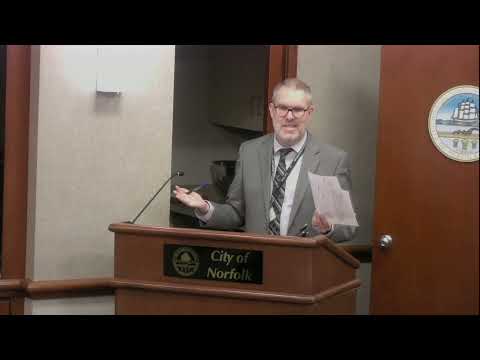
At a presentation to the commission, a planning staff member summarized enforcement options and data from a recent Willoughby sweep. The staffer described three tracks for STR approvals: administrative approvals (with a strike system), conditional use permits (CUPs, which historically were not subject to the same strike penalties) and unregistered listings, which carry civil penalties. "Compliance is the goal," the planning staff member said, framing enforcement as first aimed at getting properties into compliance and only escalating when operators repeatedly violate rules.
Why it matters: staff said unregistered listings are the main source of enforcement workload in Willoughby. In one recent multi‑day snapshot staff identified about 30 potential violations in a single community; only a small share were clearly registered STRs. That gap reflects a central enforcement challenge: third‑party "scraping" software flags probable stays but does not itself constitute verified, court‑admissible evidence, so staff must either verify a booking on a platform or obtain corroborating testimony or other evidence before pursuing penalties.
What staff proposed: a mix of clearer documentation of each violation (to make strikes cumulative and tied to property rather than operator), more frequent multi‑agency sweeps and reconsideration of the strike thresholds that lead to suspensions and revocation. Staff also presented six policy pathways — ranging from a near‑ban on new vacation rentals to a homestay‑only policy — and recommended a hybrid approach the commission had discussed earlier: freeze current approvals at a date certain, allow administrative approvals outside a buffer (e.g., 500 feet), and require CUP review for new requests inside the buffer or for multifamily properties.
Details and tradeoffs: staff reiterated that the strike system is powerful — a second strike can produce a four‑month suspension and the third a yearlong suspension — but that it can be circumvented if an operator closes a permit and re‑registers. For non‑registered listings, civil penalties start at $200 for a first violation and can climb (staff cited ranges up to $500 per offense and cumulative penalties up to $5,000). Staff said some of the most persistent operators are difficult to catch, because listings go dark or platforms display minimum‑stay settings even when stays occur.
Community positions: Willoughby residents told staff they favor stricter limits on new STRs and want administrative approvals to expire rather than be automatically renewed; STR operators said they favor a comprehensive, citywide review rather than a neighborhood‑only fix. Commission members asked about buffer distances (300 vs. 500 feet), evidence standards for the scraping software, and whether revocation should be tied to the land rather than an operator.
Next steps: staff said it will convene a stakeholder meeting with operators and civic league representatives, report back at the July 23 public hearing, aim to finalize draft text by Aug. 13, and hold the next public hearing on Aug. 27. The commission did not take a final vote at the meeting; staff asked for direction on whether the change should be limited initially to Willoughby or proposed citywide.
Ending: The commission signaled support for continued refinement and more outreach; staff will return with refined text and implementation details in the summer public‑hearing cycle.