Get Full Government Meeting Transcripts, Videos, & Alerts Forever!
Get email alerts on the Rent Stabilization topic
No spam. Unsubscribe anytime.
Salem committee backs resolution urging lift of state ban on rent stabilization after lengthy debate
Summary
The City Council’s Committee on Community and Economic Development voted to recommend a resolution asking the state to lift its ban on local rent stabilization, after a Homes for All Massachusetts presentation, councilor amendments and extensive public comment. The amended resolution will go to the full council for consideration.
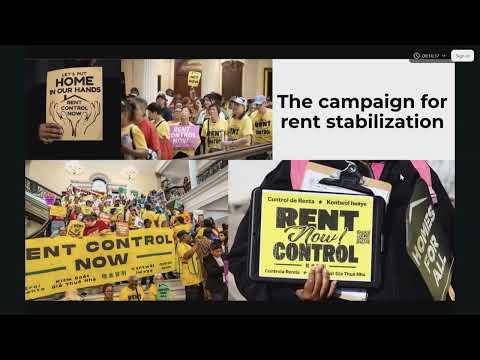
Ward 5 Councilor Lydia King moved and the committee approved sending an amended resolution to the full Salem City Council that expresses support for lifting the state ban on rent stabilization, after a presentation by Carolyn Chew, executive director of Homes for All Massachusetts, and more than an hour of council questions and public comment.
King told the committee the resolution is meant to restore local choice: "This resolution…expresses support for the state legislation…to put the power to make decisions about rent stabilization back in the hands of cities and towns in Massachusetts," she said. The resolution, as amended, urges the legislature to lift the statewide ban and allows municipalities the option to consider local rent‑stabilization measures.
Chew, who represented the statewide tenant coalition, framed rent stabilization as one tool amid a deep affordability crisis. "We believe rent stabilization is a key tool in the toolbox that cities and towns should have the ability to enact," she told the committee, citing statewide data that more than half of renters pay a third or more of their income on rent and that many gateway cities are losing long‑term residents to rising rents. She outlined language discussed in the Legislature and compromise provisions that advocates have negotiated with some industry stakeholders, including caps tied to inflation, exemptions for small owner‑occupied buildings, and protections against no‑fault evictions.
Councilors pressed for technical clarifications and cautioned about unintended effects. Councilor Flynn asked whether limits could prompt property neglect, condo conversions or preemptive rent increases; Chew said modern, "second‑generation" stabilization schemes aim for predictability, noted transition periods in draft language to reduce preemptive hikes, and pointed to mechanisms (such as condo‑conversion ordinances) that municipalities can use to address conversions.
Some councilors, including Councilor Davis, urged a data‑driven approach and cited mixed findings in academic studies about production impacts; others, including Council President Merkel and Councilor Smith, emphasized local control and the need for tools to prevent displacement. Multiple residents and community members urged the council to support the measure so Salem can have the option to act locally if the state changes the law.
During the meeting King proposed two amendments to the original resolution: she removed language specifying "a cap of 5%" and replaced it with wording that the city supports "limiting annual rent increases based on a formula accounting for the consumer price index," and she replaced a reference to a titled act with a broader statement in favor of lifting the statewide ban. Both amendments were seconded and approved by the committee.
On King’s motion to recommend the amended resolution positively to the full City Council for consideration at the next meeting, the committee voted to approve the recommendation. The committee adjourned immediately afterward.
What happens next: the amended resolution will be placed on the City Council agenda for first consideration; if the City Council approves it, the document would be a nonbinding expression of Salem’s support for state action to allow local rent stabilization, not an immediate local ordinance change.
Sources and limitations: reporting is based solely on the committee transcript and public comments. Where the transcript identified specific draft language or bill numbers, the committee and presenter noted that final language remains under negotiation in the State House and may be revised by legislative processes.