Get Full Government Meeting Transcripts, Videos, & Alerts Forever!
Get email alerts on the Land Use Regulation topic
No spam. Unsubscribe anytime.
Kaysville Planning Commission approves code changes to conform with SB 284, moves appeals to administrative hearing officer
Summary
The commission voted to adopt redline amendments to Titles 17, 18 and 19 of the Kaysville City Code to conform with recent state legislation (referred to in testimony as SB/HB 284), removing the council and planning commission as appeals authorities and directing appeals to an administrative law judge; staff said detailed ADU rules will be addressed separately.
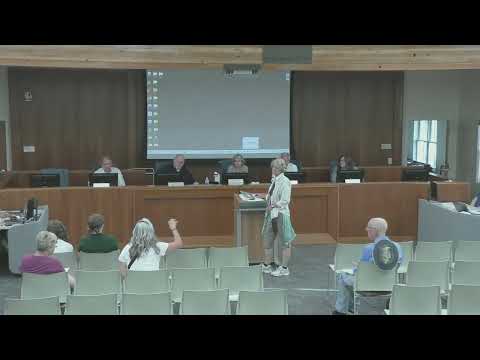
Kaysville, Utah — The Kaysville City Planning Commission on July 9 adopted text amendments to Titles 17, 18 and 19 intended to bring the city code into compliance with recent state legislation referred to in public remarks as SB 284.
Vance Pedri, an intern who drafted the ordinance language, told the commission the changes require that “the city council can no longer act as an appeals authority” and that the planning commission “can no longer act as its own appeals authority.” He said the amendments also require that “grounds for removal of a planning commissioner” be explicitly listed in city code and that applicants may appeal to the city council after 45 days if the planning commission has not acted.
Why it matters: The amendments shift the formal appeals process away from elected or advisory bodies and toward a legally trained hearing officer. Commission discussion and public comment focused on how that change will work in practice — who selects the administrative hearing officer, how conflicts are disclosed, and how pending appeals will be handled.
Commission and staff responses: A staff speaker said the city already has a code section addressing administrative law judges (referred to in discussion as section 2‑8‑2) and that past practice for selecting hearing officers has included requests for proposals and hiring licensed attorneys with municipal experience. An agency official advised that appointment of a zoning administrator and the designation of a hearing officer are typically discretionary actions of the city council and often follow recommendations from the planning or community development director.
A commissioner asked about appeals filed before the ordinance takes effect. Staff said the code in place at the time an appeal was filed governs that appeal, meaning pending appeals would be adjudicated under the rules that applied when they were submitted.
Vote and next steps: A commission member moved to accept the redline text amendments; the motion was seconded and the commission recorded affirmative votes, after which the chair declared the motion carried. Staff encouraged members of the public who raised detailed questions during the hearing to contact staff for follow-up. Staff also said a separate, forthcoming ordinance will set out detailed accessory dwelling unit (ADU) regulations and is expected to be discussed by the commission in mid to late August in advance of an October 1 state implementation deadline.
The commission’s action was limited to adopting the text amendments before it; specific implementation steps and the selection process for hearing officers will be governed by the city council and by any codified selection procedures the city adopts going forward.