Get Full Government Meeting Transcripts, Videos, & Alerts Forever!
Get email alerts on the Housing topic
No spam. Unsubscribe anytime.
Oakland adopts housing element; council and planning board advance rezoning for McBride and Leone sites amid resident objections
Summary
The Oakland Planning Board voted to adopt an amended housing element and fair share plan and endorsed several implementing ordinances. The mayor and borough council subsequently adopted ordinances rezoning the McBride (TDC/Hovan) and Leone properties and updated downtown density rules, prompting sustained public concern about sewers, water, traffic, schools and environmental impacts.
The Oakland Planning Board on March 12 adopted an amended housing element and fair share plan intended to meet the state'mandated Round 4 affordable-housing obligation, and the borough council later adopted a package of implementing ordinances that rezoned three contested sites.
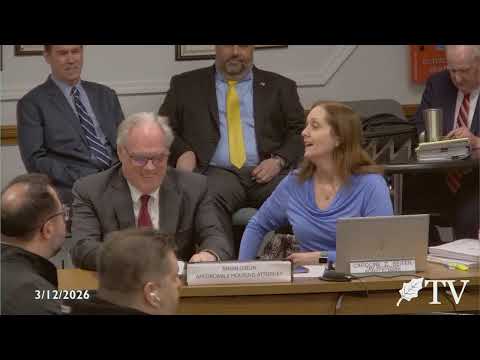
Caroline Ryder, the borough planner, told the board the changes respond to a new state law and a fast-moving DCA challenge process that left municipalities little time to prepare. Ryder said the Department of Community Affairs'issued nonbinding obligations last fall; Oakland and the special adjudicator negotiated an obligation of 286 units for Round 4 after mediation and challenges, down from an initial DCA figure the planner said was about 306.
Why it matters: the state legislation establishes aggressive deadlines and shifted review away from the Council on Affordable Housing to a court-centered process. Ryder and the borough attorney told the board that failing to adopt a housing element and required ordinances by the statutory deadlines risks loss of immunity from builder's-remedy lawsuits and fee-shifting that can expose municipalities to large legal bills.
Key votes and actions: At the planning-board hearing the board voted to adopt the amended housing element and fair share plan and to endorse a set of ordinances, including (a) a new affordable-housing and development-fee ordinance based on a DCA template, (b) a downtown density increase (DT-1/DT-2 overlays) with a 20% affordable set-aside, (c) a rezoning for Block 3401 (the McBride/TDC/Hovan property) to permit up to 240 units with a 20% affordable set-aside, and (d) a rezoning for the Leone property at 129 McCoy Road permitting up to 85 units with 20% set-aside. The planning board record shows roll-call endorsements; the mayor and borough council later adopted the ordinances by roll call during the council meeting that followed.
Developer proposals and infrastructure concerns: Ryder said some challengers proposed on-site package wastewater treatment plants to work around Oakland's limited sewer infrastructure, while others proposed connecting to upgraded pump stations. Borough engineers and consultants warned the board that water allocation and DEP permitting remain prerequisites and that developers typically bear infrastructure costs for water transmission lines, sewer upgrades or on-site treatment. The borough also presented a Boswell Engineering sewer-expansion timeline and traffic study as part of the mediation record.
Residents and local officials pressed safety and resource concerns: dozens of residents raised traffic, emergency-response, schools and environmental questions during a lengthy public-comment period. John Skirmo, identified as the president of the K'8 school district board (speaker in the public record), said the district is at capacity and that accommodating additional students would require expensive capital work or other arrangements. Multiple speakers described steep slopes, streams and wildlife on the McBride site and urged environmental studies and DEP review before any site-plan approvals.
How the borough responded: Planner Ryder and borough professionals repeatedly stressed two points: that state law limits municipalities'ability to use traffic or school-capacity concerns as sole bases to deny realistic opportunity zoning, and that even after tonight's ordinance adoptions any actual development would be subject to later site-plan review, DEP permits and possible municipal or third-party approvals. The borough emphasized that passing ordinances creates a "realistic opportunity" for developers to propose projects and preserves the town's chance to secure immunity if the court approves the settlement terms.
Environmental and neighborhood trade-offs: the proposed inclusionary ordinances include waivers of some local rules (planners described steep-slope and tree-removal protections as potentially cost-generative and therefore limited for inclusionary developments under state rules). That waiver language drew repeated concern from residents who said that DEP permitting alone may not address local priorities and that rezoning large remaining tracts of undeveloped land could transform neighborhood character.
Votes at a glance: the transcript records roll-call votes by name at both the planning-board and council meetings. The planning board adopted the amended housing element and endorsed the ordinances; the borough council later voted to endorse the housing element and adopt ordinances amending the borough code (including the development-fee ordinance), updating downtown overlay densities, and rezoning the McBride (Block 3401) and Leone (129 McCoy Road) properties. (Detailed vote rolls and motion text are recorded in the official minutes and the transcript.)
What comes next: adoption of ordinances does not authorize immediate construction. Any developer seeking to build would need to submit final site plans, obtain DEP and utilities approvals for water and sewer, and face additional public hearings. The borough also must submit materials to the court-appointed adjudicator and seek judicial approval to secure immunity from builder's-remedy litigation. Residents and several board members indicated they will continue to press for environmental studies, DEP scrutiny and public involvement at each subsequent application stage.
The planning board and council left the record open only in the sense that procedural and permitting steps remain; the board and council said they will continue to work with the borough attorney and engineers as mediation and court review proceed. The public record for the meeting includes multiple studies and appendices (rehabilitation manual, ordinance templates, Boswell Engineering sewer timeline and traffic studies) made part of the meeting packet.