Get Full Government Meeting Transcripts, Videos, & Alerts Forever!
Get email alerts on the Digital Signs topic
No spam. Unsubscribe anytime.
Planning commission approves zoning change to allow digital signs on school property
Summary
The Crescent City Planning Commission unanimously approved a citizen-initiated zoning amendment to allow school digital signs (submitted by Crescent Elk Middle School), adopting tailored definitions and directing staff to rely on existing illumination standards; the measure moves to city council.
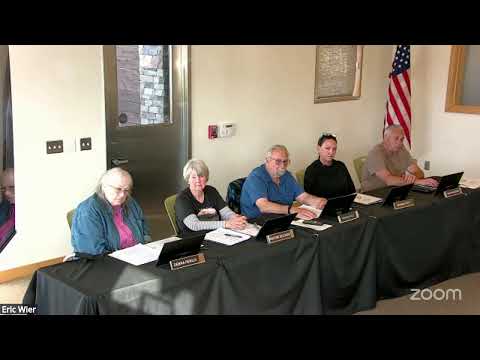
The Crescent City Planning Commission on July 9 voted unanimously to recommend a zoning amendment that would allow digital LED signs on school property, a citizen-initiated proposal brought forward by Crescent Elk Middle School.
Planning staff described the amendment as narrowly tailored for schools: it would add a “school digital sign” definition, create a scoreboard-display definition, and list school digital signs as a subtype of existing digital signs so commercial sign rules would remain unchanged. Staff said each proposed sign would be reviewed on a case-by-case basis and that, unless treated as a historic-resource action, the ordinance amendment would likely be exempt from CEQA.
Planning staff said the intent is to provide schools a way to convey time-sensitive information to students and parents, including event notices, and that proposed rules in the draft include distance and illumination criteria drawn from existing sign regulations. “This is a citizen-initiated effort,” staff said, noting the amendment was based on a proposal developed with Crescent Elk Middle School.
Commissioners discussed allowable hours for illumination. Staff’s draft referenced a daytime window; several commissioners recommended flexibility for school events that run later than early-evening hours. One commissioner proposed language allowing signs to remain lit “until the event is over” rather than imposing a strict 7 p.m. cutoff, and the commission directed staff to clarify the timing language so routine evening games and activities would be covered.
Commissioners also asked how brightness would be addressed. Staff replied that any digital sign remains subject to the city’s existing illumination standards (the code’s illumination subsection applies to illuminated signs) and therefore the amendment need not restate numeric brightness levels such as nits. A resident who spoke during public comment urged sensitivity to wattage and color temperature to avoid light spill to neighboring homes and cited a local sign operating below 160 nits as a desirable example.
A commissioner moved to adopt the commission’s recommendation to approve the amendment and forward it to the city council; the motion was seconded and carried on a unanimous roll call. The commission’s approval is a recommendation to city council, which will hold its own public hearing and make a final determination. If council adopts the ordinance, the city will make any final CEQA determination and, following adoption, the ordinance would take effect per the regular timelines set out in municipal code.
Next steps: the amendment will be scheduled for city council consideration; staff will return with revised ordinance language reflecting the commission’s direction on hours and a clear statement that digital signs remain subject to the city’s illumination standards.