Get Full Government Meeting Transcripts, Videos, & Alerts Forever!
Get email alerts on the Procurement Tech topic
No spam. Unsubscribe anytime.
Board approves $73M technology purchase‑order authority and $6M Apple acquisition after debate on oversight
Summary
Seattle Public Schools authorized large technology purchase vehicles — up to $73.1M with Thornburg Computer Services and a separate $6M Apple purchase order — after directors pressed staff for clearer pedagogical plans and follow‑up reporting; the board also approved related contracts for deaf‑services and other vendor agreements.
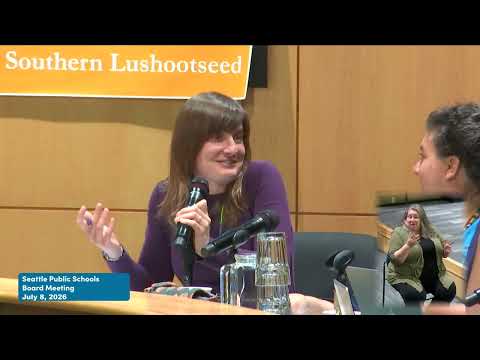
The Seattle Public Schools board voted unanimously on July 8 to authorize large technology purchasing vehicles and related contracts after an extended discussion about oversight, pedagogy and board‑staff roles.
Vice President Briggs moved approval of an authorization allowing Superintendent Scholdner to execute purchase orders under RFP 260105 with Thornburg Computer Services not to exceed $73,118,479 across fiscal years 2027–29. Directors pressed staff for clearer implementation plans, citing concerns that the district was relying on 2018 OSPI standards as part of the procurement rationale and asking for committee or board-level follow-up on how devices would support classroom instruction. Superintendent Scholdner said the authorization creates a procurement vehicle and pledged regular updates and a public work session; the motion passed unanimously.
Separately, the board authorized a three‑year purchase vehicle with Apple Computer Corporation for up to $6,000,000 to refresh devices across FY27–29. Operations committee members had declined to recommend the item after questions about planned classroom use (including proposals to provide devices for K–2), but several directors noted the expenditures were budgeted in the capital plan; the superintendent agreed to provide implementation reporting and to engage the board in a scheduled technology study session.
The discussion also included two renewals to support students who are deaf or hard of hearing: a contract with Hearing, Speech and Deaf Center up to $1,172,400 and a 'Listen and Talk' contract up to $959,236. Whitney Smith, director of early learning, said both are renewals now coming forward because purchasing thresholds changed; each provider covers required modalities (spoken‑language and ASL) and would be amended if service counts exceed contract caps.
Board members repeatedly framed their questions around governance: some directors said capital budgeting and pre‑approved levy planning make routine contracts appropriate for consent, while others said the board must retain oversight when large operational or pedagogical changes are possible. Vice President Briggs and Director Rankin asked for public and committee briefings; staff said a technology work session is scheduled.
What was decided: The board approved the procurement authorities and related contracts and asked staff for follow‑up reporting on implementation plans, pedagogy, and how purchases will be used in classrooms.
Representative quotes: “I do think there's an over reliance of technology and over reliance of screen time,” Superintendent Scholdner said, while adding he believes the district should retain the ability to purchase necessary items. "We need updates on how things are being spent and how they are being used," Director Rankin said.
Ending: Directors scheduled a technology study session and asked staff to return with usage and implementation reports; several members said they expect to see detailed post‑purchase accounting for levy and operating funds.