Get Full Government Meeting Transcripts, Videos, & Alerts Forever!
Get email alerts on the Setback Variance topic
No spam. Unsubscribe anytime.
Elkhart BZA denies Langfords’ riverfront setback variance after neighbor objections
Summary
The board denied a request by Garrick and Tricia Langford to reduce the riverfront rear setback at 12 Melrose Manor from about 64.9 ft to 36.6 ft. Neighbors said the change would block river views, reduce property values and might set an undesirable precedent; several speakers urged the parties to negotiate a compromise.
The Elkhart City Board of Zoning Appeals voted on July 9 to deny a rear‑setback variance sought by Garrick and Tricia Langford for 12 Melrose Manor that would have reduced the riverfront setback from the established roughly 64.9 feet to about 36.6 feet.
Petitioners presented plans to replace a deteriorated screened porch with an expanded dining/living area and attached porches; they said the intended addition would extend parts of the house approximately 12 feet closer to the river but argued much of the work replaces a collapsed screened porch and is modest in scope. The petitioner noted constraints of older riverfront lots and said the project was meant to provide a family dining space on the main level.
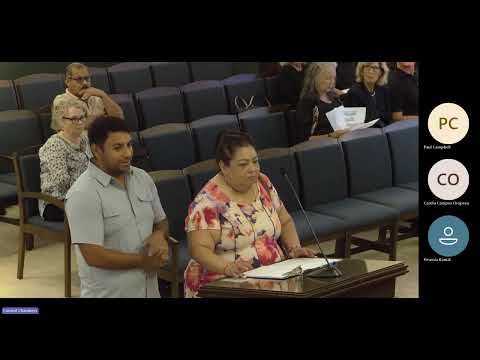
Multiple neighbors—speakers who identified themselves as long‑time Melrose Manor residents—objected. Paula Turk said the addition would substantially block her river view and estimated it would remove roughly 45% of her view; Paul Campbell, a nearby homeowner and longtime real‑estate professional, said the variance would diminish neighbors’ property values and could enable later, more intrusive construction. Several neighbors submitted surveys and written objections. Some speakers proposed restrictive covenants to prevent later enclosure of porches.
Staff recommended approval, saying such variances are common on older riverfront lots and that the addition’s scale is not out of character for the neighborhood. After discussion the board’s roll call returned three No votes, and the motion to approve failed. The chair urged neighbors and the petitioners to work toward a compromise and suggested returning with a revised proposal.