Get Full Government Meeting Transcripts, Videos, & Alerts Forever!
Get email alerts on the Sign Ordinance topic
No spam. Unsubscribe anytime.
Commissioners give staff direction on sign‑ordinance rewrite, debate window signs and SLAP/Miller test language
Summary
Lapeer City planners and commissioners discussed sign‑ordinance text amendments remanded by the city commission, focusing on purpose language, how to treat window signage (temporary vs. permanent, 25% cap), downtown exceptions, and adding Miller‑test language to protect SLAPS expression while allowing regulation of obscene displays.
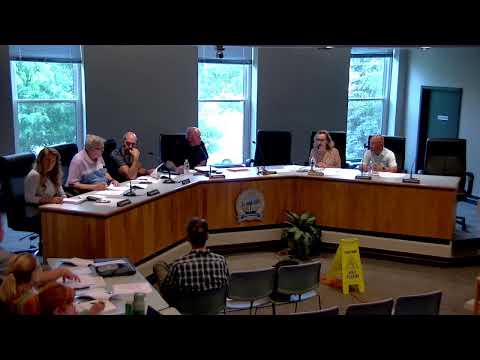
The Lapeer City Planning Commission on July 9 reviewed sign‑ordinance text amendments the city commission sent back for clarification and offered staff guidance on three principal points: the ordinance’s purpose language, rules for window signage, and how to handle potentially obscene content.
Planner Wade Burkholder walked commissioners through a redlined ordinance and a city‑manager memo outlining areas of concern. Burkholder said he aims to reframe the purpose to emphasize quality and placement of signage rather than an effort to "minimize outdoor advertising." "The purpose of this article is to establish regulations governing the installation of placement and maintenance of signs in a content neutral manner... to minimize visual clutter," he said.
Commissioners spent the bulk of the discussion on window signage. Staff noted the draft language placed window signs in the permanent nonresidential sign table; commissioners asked whether window signs should instead be treated as temporary signage in some districts (allowing frequent, permit‑free changes) or remain permanent with limits for business identification. Multiple commissioners supported allowing temporary window signage without permits for small downtown businesses while keeping a limit for permanent identification (a commonly cited benchmark was 25% of window area). Commissioner Bettson asked whether a business name counts as a sign and said permanent business‑identification signage could be permitted while restricting advertising content.
The commission also debated geographic exceptions. Several commissioners suggested allowing more flexibility for the Central Business District (CBD) — where storefronts are close to pedestrians — while holding other commercial corridors to stricter standards to avoid visual clutter. Staff noted they would return with language reflecting the group's guidance.
On content‑based concerns, Burkholder reviewed legal constraints and proposed using the Miller obscenity test to define what local government may regulate. He said the test helps distinguish obscene material from protected political, artistic or scientific speech (often called SLAPS/SLAP). "Signs with political messaging, artistic expression, social commentary, or educational content, even if it's controversial or offensive, may not be regulated," he said, and recommended drafting language so enforcement rests with staff applying the Miller test rather than vague terms such as 'lewd.' Commissioners requested the draft explicitly state that city staff make final enforcement determinations.
No ordinance language was adopted at the meeting; staff were asked to draft revised wording consistent with commissioners’ direction — including clearer permanent vs. temporary window sign distinctions, a recommended 25% cap for permanent window identification as a starting point, CBD exceptions to consider pedestrian proximity, and Miller‑test language to protect SLAPS expression while allowing regulation of obscene displays. Staff indicated a redlined draft and possible public‑hearing requirements will return to the commission for further consideration.