Get Full Government Meeting Transcripts, Videos, & Alerts Forever!
Get email alerts on the Diagnostics Reimbursement topic
No spam. Unsubscribe anytime.
Presenter for iGenx/IGNEX urges gap-fill reimbursement for new multispecies immunoblots for Lyme, babesiosis and Bartonella
Summary
A clinician for IGNEX told the CMS panel that recombinant immunoblots his lab developed detect multiple Borrelia and other tickborne species missed by older tests and urged gap-fill pricing so laboratories will accept insurance and patients can access them.
A clinician presenting for IGNEX Incorporated told the CMS clinical diagnostic laboratory test panel that the company’s recombinant immunoblots pick up infections standard tests often miss and asked the panel to consider gap-fill reimbursement so laboratories will offer the assays broadly.
The presenter said the immunoblot uses individually printed recombinant antigens and an internal, patient-specific calibrator that, in his view, makes reading and results more consistent than the traditional western blot. "29 of these 43 cases would have been missed if the western blot was used for diagnosis," he said when describing a 43-sample comparison between the iGenx test and western blot, and he later told the panel the multispecies design enables detection of at least nine Borrelia species as well as multiple Babesia and Bartonella species.
Why it matters: Panelists on the CMS panel weigh whether to assign existing CPT/PLA crosswalks or allow gap-fill pricing for newly described tests. The presenter argued that more-sensitive, multispecies assays would improve diagnosis and reduce downstream health-care costs, but that the tests are resource-intensive and unlikely to reach patients if reimbursement is set too low.
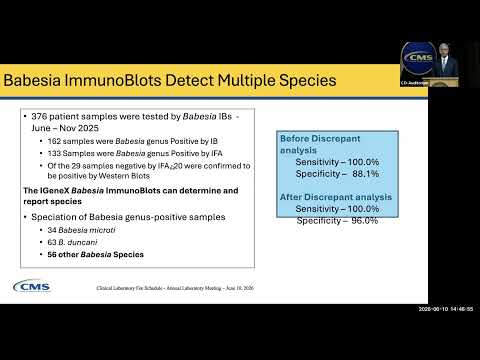
Details cited to the panel included sensitivity comparisons using CDC and clinical specimens, a Babesia immunoblot series (162 positives by immunoblot vs. 133 by IFA), and small-series Bartonella data the presenter said showed higher sensitivity and less cross-reactivity than IFA. The presenter also described the recombinant production workflow for dozens of antigens and noted the tests are patented.
Panel questions focused on technical complexity and resource use rather than clinical anecdotes. One panel member asked the presenter to provide the "key technical aspects" and assay resource estimates so the panel could evaluate test complexity and crosswalk or gap-fill recommendations; the presenter agreed to supply that information. The meeting closed with CMS staff asking presenters to provide requested follow-up by the panel deadline.
The panel did not make an immediate determination and requested additional technical documentation before assigning a crosswalk or allowing gap-fill pricing.