Get Full Government Meeting Transcripts, Videos, & Alerts Forever!
Get email alerts on the Gender Violence Protocols topic
No spam. Unsubscribe anytime.
Lawmakers press Parole Board and corrections for specialized gender‑violence protocols and more staff
Summary
During a July 9 oversight hearing legislators urged development of gender‑specific risk protocols, better access to rehabilitative programs and staffing increases for socio‑penal technicians and psychologists; DCR and the Board agreed to provide program curricula and staffing numbers within five days.
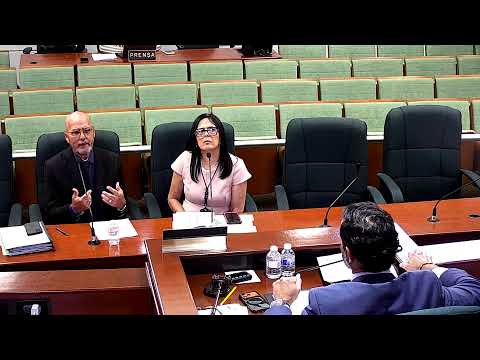
A group of House representatives used July 9 testimony to press the Junta de Libertad Bajo Palabra and the Department of Correction and Rehabilitation (DCR) for more specialized treatment of offenders convicted of gender‑based violence and for more resources to support rehabilitation and supervision.
Representative Gutiérrez Colón framed the session around the recent killing of Jennifer Marie Torres and urged the Board and DCR to adopt protocols tailored to gender‑based offending. “Creo que ha faltado de la discusión el tema de la violencia de género,” she said during questioning.
Board members acknowledged the existence of re‑education modules (for example, the eight‑month program “Aprendiendo a Vivir Sin Violencia”) but said access and program availability vary by institution. Doctora Carla de Jesús Fuentes and other Board officials said current modules address many relevant risk factors but that specialists and formal gender‑violence protocols were limited.
DCR witnesses confirmed the need for more staff: they estimated a shortfall of roughly 94 socio‑penal technicians and about 15 additional psychologists to manage the current community and institutional workload (DCR reported about 6,716 participants in community programs). Both Board and DCR officials told the committee they would supply full curricula, training materials and participation statistics to help the commission evaluate whether programs adequately address gendered risk factors.
Lawmakers proposed several near‑term steps: (1) require clearer curricula and program manuals for the Board and DCR to produce; (2) expand specialized training for examiners and TSS staff on gender‑based violence indicators; and (3) consider regulatory or legislative updates if reviews show gaps that cannot be remedied administratively. Committee members emphasized the need to balance the constitutional duty to rehabilitate with victims’ safety and public protection.
DCR and the Board accepted document requests: training/prontuario for programs, lists of participating institutions and counts of attendees, and staffing levels — all to be provided to the commission within five business days.
Why it matters: Lawmakers said specialized protocols and better resourcing would improve risk assessment for offenders convicted of gender‑based violence and could reduce the risk of future harm to victims and the community.
What’s next: Committee staff will review submitted curricula and staffing data and the commission indicated it may hold follow‑up hearings or propose regulatory/legislative remedies.
Sources: Testimony by Rep. Gutiérrez Colón; Doctora Carla de Jesús Fuentes; Madeline González Ortiz; Lic. Francisco Méndez Rivera; Lic. Samuel Silva Rosas, July 9, 2026 hearing before the House Judiciary Commission.