Get Full Government Meeting Transcripts, Videos, & Alerts Forever!
Get email alerts on the Middle Housing topic
No spam. Unsubscribe anytime.
Madison P&Z adopts middle-housing text amendment to comply with state law
Summary
The Madison Planning & Zoning Commission voted July 9 to adopt a zoning text amendment adding a middle-housing section to implement Connecticut's summary-review requirement for 2'9-unit developments; the amendment sets prescriptive design and dimensional standards and takes effect July 13, 2026.
The Madison Planning & Zoning Commission voted July 9 to adopt a zoning text amendment (application 26-18) that adds a new Section 9.5 to implement the state's middle-housing summary-review requirements. The commission set an effective date of July 13, 2026.
Town consultants told the commission the state law requires municipalities to allow certain 2-to-9-unit "middle housing" developments by summary review and limits municipal discretion to objective, prescriptive standards. "The statute requires that these be treated as a by-right use and that any standards be nondiscretionary — you must state where, how many, and characteristics such as color or roof type," said Mike Damato, the presenter to the commission.
Damato said the draft amendment confines the new allowance to developments containing between two and nine dwelling units, and it is not intended to change rules for single-family homes or larger multifamily construction. The draft also proposes prescriptive design elements for conversions and new construction, including materials, roof types and on-site layout to reduce discretionary interpretation.
Commissioners spent much of the hearing debating a proposed 1,600-square-foot cap on cottage-cluster units. Damato described the 1,600 figure as a starting reference that the commission could keep, change or remove: "I started at the high point because you could certainly come down from there," he said. Commissioners questioned whether an explicit cap was necessary or whether market forces and other regulations would be sufficient.
The draft also clarifies how nonconforming commercial buildings proposed for conversion to middle housing would be treated. The commission agreed proposed language should ensure that existing nonconforming features do not prevent incorporation of development standards related to lighting, open space, buffering and operable windows. Staff and the consultant agreed to tighten wording to make that outcome explicit.
The Conservation Commission and other town reviewers recommended several changes—including lower correlated lighting color temperature and a preference for native landscaping species—which staff said were incorporated where appropriate into the revised draft presented at the hearing.
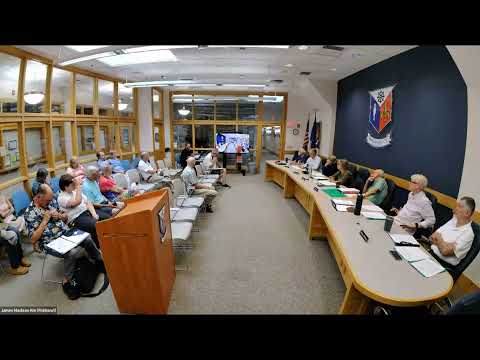
After closing the public hearing, the commission deliberated and approved the amendment by roll call, finding the changes align local regulations with state law and the town plan of conservation and development. The amendment becomes effective July 13, 2026.
What happens next: The town will post the adopted regulatory text and notify applicants; permits and special applications that are affected by the new section will follow the new, prescriptive standards and summary-review procedures.