Get Full Government Meeting Transcripts, Videos, & Alerts Forever!
Get email alerts on the Zoning Rle topic
No spam. Unsubscribe anytime.
Farragut adopts new rural large-lot zoning after debate over review of variances
Summary
On July 9 the Farragut Board of Mayor and Aldermen approved Ordinance 26-10 on second reading to create a Rural Large Lot (RLE) zoning district with a two-acre minimum lot size. Residents urged guardrails for waivers; the board debated whether variances should return to the elected body and approved the ordinance 3–2.
The Board of Mayor and Aldermen voted 3–2 on July 9 to adopt Ordinance 26-10, creating a Rural Large Lot (RLE) zoning district intended to provide a lower-density, lower-impact development option with a two-acre minimum lot size.
Mark Shipley, who presented the item to the board, said the RLE district is intended to “give somebody an opportunity to have a lower density, lower impact development option” and to allow staff and the planning commission limited flexibility on requirements such as street width, open space and stormwater features. He said that the planning commission unanimously recommended approval and that staff continued to recommend the ordinance.
The measure drew public comment and questions from board members about how variances or reductions in subdivision requirements would be handled. Resident Diane Hall urged “a second layer of approval” so elected officials could review waiver decisions, saying, “My concern here is that without any defined standards for rural, there’s a potential for inconsistencies on waivers to developers based on MPC membership.”
Alderman Burnette said he supported the goal of preserving rural character and liked that the district “incentivizes developers to consider that zoning” rather than denser subdivisions, but he proposed that any requested variances accompany the rezoning and come to the board as a resolution so elected officials could review them.
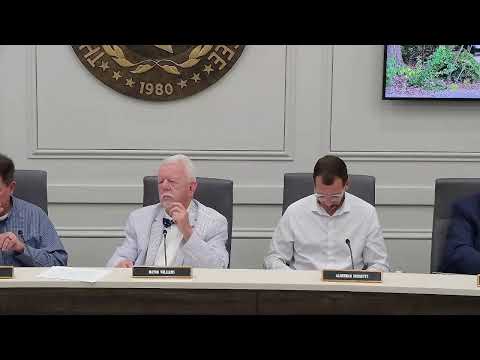
Several board members noted state law generally assigns subdivision variances to the planning commission; Mark Shipley said the town attorney could be asked whether language could be added to the ordinance to permit an additional review by the legislative body in specific cases. After deliberation the board proceeded with a roll-call vote: Alderman LaCroix and Vice Mayor Meyer voted yes; Alderman Burnette and Alderman Kane voted no; Mayor Ron Williams voted yes, resulting in a 3–2 approval on second reading.
The ordinance replaces an older, unused rural single-family acre district and creates a new option the town hopes will preserve the community’s rural character while offering regulatory flexibility for very large-lot development. The board did not adopt any immediate language changing who receives final sign-off on variances; several members asked staff to confer with the town attorney on that question. The ordinance will take effect according to the town’s normal code-adoption schedule unless otherwise specified.