Get Full Government Meeting Transcripts, Videos, & Alerts Forever!
Get email alerts on the Labor Employment topic
No spam. Unsubscribe anytime.
Montgomery delegation committee advances bill setting suspension timelines for WSSC employees
Summary
The Metro Washington Area Committee advanced bill 10426, which requires WSSC Water to meet specific pre-disciplinary steps and imposes 30- and 5-day deadlines for suspensions with a right to appeal to the Office of Administrative Hearings. WSSC counsel urged carve-outs; the union urged passage.
The Metro Washington Area Committee of the Montgomery County Delegation voted to advance bill 10426, a local measure that prescribes five pre-disciplinary steps for WSSC Water and requires the utility to institute suspensions within 30 days of knowledge of alleged misconduct (and within five days for suspensions without pay), while granting employees a right to appeal suspensions to the Office of Administrative Hearings.
Lisa Arndquist, associate general counsel for WSSC Water, told the committee the utility supports much of the bill’s process requirements but opposes the strict deadlines. "The 30 day time limit is unduly restrictive," Arndquist said, arguing the statute could bar discipline if all procedural steps cannot be completed in time. She cautioned that WSSC’s operations — including multiple facilities, field work in private residences and continuity of service for large customer populations — create circumstances where additional time or carve-outs are necessary to protect public health and safety.
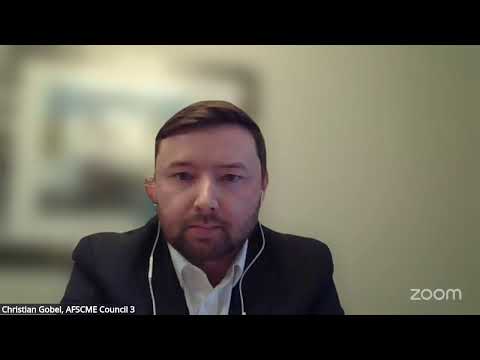
Christian Goebel, legislative and political coordinator (Council 3), speaking for union members, urged the committee to adopt the bill as drafted. "We would like to proceed with the legislation in its current posture," Goebel said, arguing that a clear timeline prevents prolonged uncertainty for workers and mirrors protections in the state personnel system.
Delegates pressed both sides on specifics. Arndquist pointed out that some nearby agreements, notably a Prince George’s County AFSCME contract cited in testimony, provide a 90-day window with carve-outs for criminal matters, while Montgomery County personnel regulations use a 30-day advisory standard that allows delays when investigations or circumstances justify them. She requested exceptions for criminal charges and for investigations by WSSC’s independent ethics board, which may be prohibited from sharing certain information with management.
Committee members also discussed whether MDOT and other agencies are governed by the same statutory language; Arndquist said some agencies operate under the state Personnel and Pensions Article §11-106 timeline by statute while other agencies adopt comparable standards by regulation.
After discussion, Delegate Vogel moved to advance the bill; the motion was seconded by Delegate Korman. The committee held a voice vote, and the chair announced that bill 10426 "passes out of this committee," with the formal delegation vote scheduled for Friday.
The committee’s forward action means the bill will proceed through the local-delegation process and, if supported there, continue to later legislative stages. WSSC officials said they remain engaged in bargaining with the union and indicated management could seek a formal commission position ahead of the delegation’s next steps.
What’s next: The delegation will take a formal vote on Friday; WSSC said the commission may be briefed at an upcoming meeting in February and could establish a position after further discussions with the union.