Get Full Government Meeting Transcripts, Videos, & Alerts Forever!
Get email alerts on the Economic Development topic
No spam. Unsubscribe anytime.
New Iberia council begins writing rules for proposed Lanyak Village economic district
Summary
Mayor and council opened detailed, multi-hour discussions on an ordinance to govern economic development districts (EDD) — including permitted reimbursements, job and maintenance requirements, clawbacks and sunset options — and said no deals will be signed until the ordinance and developer agreements are complete.
New Iberia’s mayor and city council opened a lengthy public discussion on a proposed economic development district for the Lanyak Village area, laying out the rules the city will require before approving any developer incentives.
The council’s presentation, led by the mayor, said the next steps are to draft an ordinance that establishes what public incentives can cover, the performance standards required of developers and the mechanisms to recoup funds if commitments are not met. “We’re going to do an ordinance, and we do you want a stake, you watch the cow get cut,” the mayor said, emphasizing that the city will set clear terms before any agreement is signed.
Why it matters: Council members said the tools would be used to attract major projects that otherwise would bypass New Iberia — bringing jobs and sales taxes — but they acknowledged community concern about using public money for private parking lots or ongoing, indefinite taxes. The council repeatedly stressed that no tax will be levied and no developer will be paid until the ordinance and a binding development agreement are finalized.
What the ordinance will require: The draft framework discussed by the council includes eligible uses (façade and storefront improvements, sidewalks, signage and, in some cases, parking-lot reconstruction), minimum job-creation and wage commitments, audited reimbursement on a reimbursement basis, detailed performance security and clawback provisions, and design and maintenance standards. Applicants would submit site plans, cost estimates and schedules; reimbursements would require paid invoices, proof of payment and CPA-audited documentation. The city attorney and outside counsel will help craft the legal agreement, the mayor said.
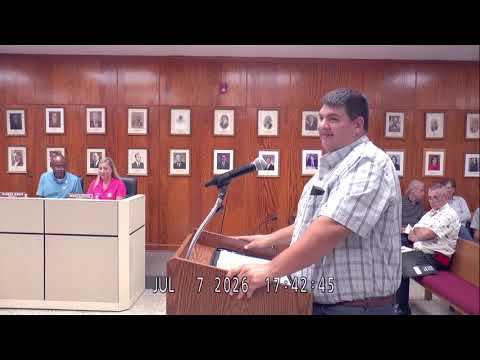
Contentious points: Residents and several council members questioned whether the proposed 1% incremental sales tax would be perpetual, who would decide how revenues are spent, and whether existing property owners should be required to fix their own lots. Public commenters Sid Boudreaux and Robert McCurley urged the council not to use a new sales tax to pay for parking-lot repairs and asked that neighborhood streets such as Darby Lane receive priority repairs.
Next steps: Council members said they will work over the next meetings to finalize the ordinance language. If the council approves the ordinance, each district designation and any tax levy would still require separate votes and a binding development agreement. The mayor estimated the full process of ordinance drafting, agreement negotiation and two readings to levy a tax could take roughly four months; he said the council will publish materials and continue the discussion in public meetings.
The city posted the EDD draft and supporting materials for council review and encouraged residents to watch meetings on the city’s YouTube channel for complete and accurate information.