Get Full Government Meeting Transcripts, Videos, & Alerts Forever!
Get email alerts on the Environmental Health topic
No spam. Unsubscribe anytime.
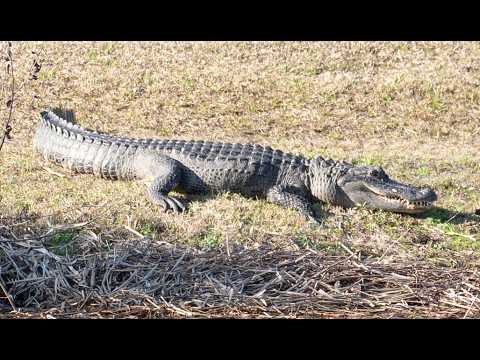
Researchers report PFAS and lead in Kiawah Island alligators; urge caution and continued monitoring
Summary
Dr. Thomas Rainwater told Kiawah Island residents that blood and tissue testing shows PFAS congeners and lead exposure in local alligators, with Kiawah ranking second for two common PFAS congeners among 12 sampled sites; he urged residents not to feed gators and recommended further monitoring.
At a public presentation in Kiawah Island, Dr. Thomas Rainwater described contaminant testing from alligator blood and tissues and the implications for wildlife and human shared-use waterbodies.
Rainwater said researchers have tested for metals (including lead and mercury), legacy pesticides, PCBs, PFAS and emerging contaminants such as microplastics. "Of all 12 sites, Kiawah was 2nd highest with those 2 [PFAS] congeners," he said, noting that the team does not yet know the cause of the elevated readings or their biological significance.
He described routine collection of stomach contents from nuisance or euthanized animals and frequent findings of lead sinkers and fishing weights in gator stomachs. Rainwater said acidic stomach conditions can release lead into the bloodstream over time and pointed to international reports of anemia and tooth loss in crocodilians exposed to lead as experimental or comparanda evidence; he stressed his team is not seeing the same mortality pattern on Kiawah but that detected levels are concerning enough to merit follow-up.
The presentation did not recommend specific regulatory actions; instead Rainwater framed this as ongoing monitoring and research. He encouraged safe human behavior around ponds, adherence to town and DNR rules, and local efforts to limit lead sources (for example, eliminating lead sinkers) to reduce exposure risks.
During questions, Rainwater said radioisotope testing had been done elsewhere (Savannah River/DOE work) but not on Kiawah alligators; he suggested such testing could be explored locally if there were reason to suspect radioisotope exposure.
The town has not announced policy changes or new restrictions based on these findings; Rainwater and collaborators emphasized the need for additional analyses to clarify exposure pathways and potential health effects.