Get Full Government Meeting Transcripts, Videos, & Alerts Forever!
Get email alerts on the Hillside Ordinance topic
No spam. Unsubscribe anytime.
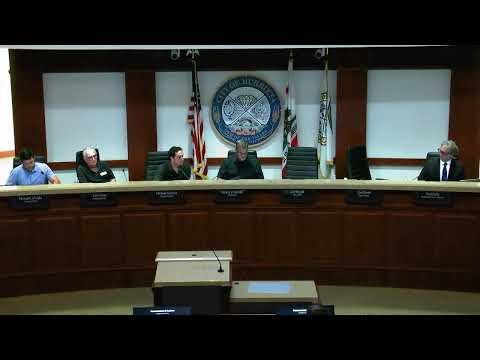
Planning commission forwards hillside ordinance revisions after debate over 5-acre and cubic-yard exemptions
Summary
After a lengthy staff presentation and public comment, the Murrieta Planning Commission voted to forward revisions to the hillside development code to the city council, endorsing clearer mapping and exemption criteria but sparking debate over possible blanket exemptions for parcels under five acres.
The Murrieta Planning Commission voted to forward proposed amendments to the city's hillside development code to the City Council after a multi-hour discussion about how to balance homeowner flexibility with hillside preservation.
Senior Planner Chris Tracy told the commission the package is intended to remove ambiguity in slope calculations, use GIS-based mapping with an appeals option, and clarify definitions for "developed," "undeveloped" and agricultural uses. "What we hope that this will achieve for everyone is just a clear direction for property owners, staff, and the community as a whole as it relates to the hillside regulations," Tracy said.
The staff proposal would exempt previously disturbed portions of parcels from discretionary hillside development-plan review while retaining objective grading and safety standards. Staff showed examples and parcel tabulations: roughly 319 privately owned parcels are already developed inside the overlay, while about 51 remain largely undeveloped.
Commissioners debated multiple options for thresholds. Commissioner DeSenna proposed exempting parcels under 5 acres from portions of the code; Commissioner LaPaglia suggested increasing the cubic-yard threshold for discretionary review from 50 to 200 (or even 400) cubic yards for small-lot work like accessory dwelling units. Principal Engineer Rick Alsaga cautioned on engineering triggers, noting that "50 cubic yards can happen quite quickly" and outlining when grading permits, fine-grading drainage reviews or hydrology analyses would still be required for safety and water-quality reasons.
Public commenters urged flexibility for small homeowners and criticized large, engineered walls erected by developers. Dan Long, a member of the public, said the city had not always realized the general-plan vision and asked the commission to favor homeowner flexibility: "I support a higher threshold and as much flexibility as possible for homeowners," he said. Another attendee urged a line-of-sight exemption for parcels not visible from Interstate 15 or 215 so unseen hillside lots would not be governed as strictly.
The city attorney and staff stressed the difference between exempting a parcel from the discretionary development-plan permit (what the staff package focuses on) and exempting it entirely from the hillside ordinance. The city attorney warned that a blanket rule exempting all parcels under 5 acres from the hillside ordinance would have broad legal and policy consequences and "I would not recommend that," saying it would require wholesale code revisions.
Commissioner Beam moved to accept staff's recommendation and forward the development-code amendments and related environmental determination to the City Council; the motion carried. The transcript records some clerical confusion in the roll-call playback, but the commission recorded the motion as carrying by majority; staff said the package will move to the council for final action and that staff will continue to refine thresholds and implementation details, including the appeal process for property owners who dispute the map or calculations.
The Council will receive the Planning Commission's recommendation and decide whether to adopt the amendments, adjust thresholds (acreage or cubic-yard-based triggers), or direct staff to rework the map-based approach.