Get Full Government Meeting Transcripts, Videos, & Alerts Forever!
Get email alerts on the Resolution 2231 Legal Basis topic
No spam. Unsubscribe anytime.
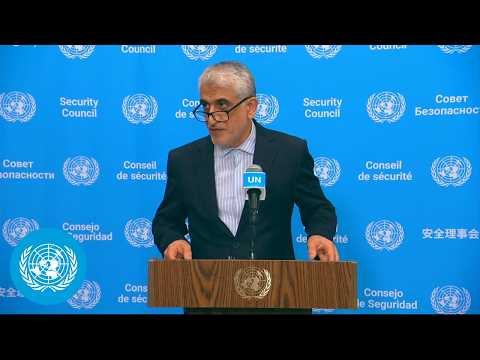
Ambassador says Security Council nonproliferation meeting "had no legal basis" after Resolution 2231 expiry
Summary
An ambassador told the Security Council the nonproliferation meeting lacked a legal basis because Security Council Resolution 2231 expired on Oct. 18, 2025, and argued the secretary-general's report and a briefing violated the secretariat mandate; no counterstatement appears in the transcript.
An ambassador addressing the United Nations Security Council said the session convened under the nonproliferation agenda "had no legal basis," arguing that Security Council Resolution 2231 expired on Oct. 18, 2025, and that measures and mandates established under it "ceased to have legal effect." The ambassador thanked Russia and China for opposing the meeting and noted Pakistan and Somalia abstained from supporting its convening.
The speaker told the council that, from the expiration date, "All measures, mandates, reporting requirements, and mechanism established pursuant to the resolution terminated and ceased to have legal effect," and said there was therefore no legal basis for the secretary-general to submit reports or for the Security Council to discuss the matter under that agenda item. The ambassador further asserted that the secretary-general's report and the briefing by Under-Secretary-General Kaulo "violated the secretariat mandate." The statement characterized any attempt to continue implementation of Resolution 2231, including reliance on prior notes or established practice, as "legally invalid."
The ambassador also argued that the E3 (France, Germany and the United Kingdom) "had no legal or procedural basis" to assert claims under Resolution 2231, saying they had failed to meet commitments under the JCPOA/GCPOA and therefore lacked standing to invoke the so-called "snapback" mechanism.
The remarks in the transcript are presented as an allegation and legal argument by the ambassador; the transcript does not include any response from other council members or the secretary-general that would confirm or rebut the legal conclusions presented.
The ambassador closed by urging the council and secretary-general to respect what he described as the limits of the resolution's validity and the secretariat's mandate and to refrain from pursuing measures he said were no longer legally operative.