Get Full Government Meeting Transcripts, Videos, & Alerts Forever!
Get email alerts on the Superintendent Search topic
No spam. Unsubscribe anytime.
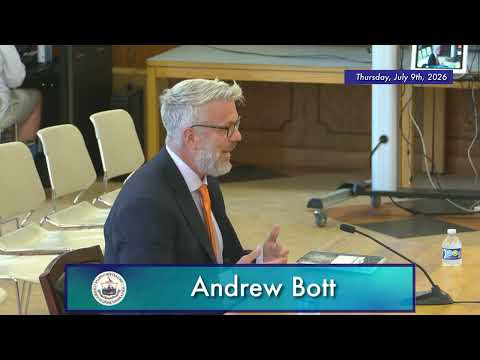
Andrew Bott, superintendent finalist, emphasizes equity, data and community engagement in Salem interview
Summary
Andrew Bott told the Salem School Committee he would prioritize a clear district vision, data-driven budgeting and targeted supports to close opportunity gaps; he cited reallocating literacy specialists by need, expanding accessible career and early-college pathways, and building trust through sustained community conversations.
Andrew Bott, the finalist for Salem Public Schools superintendent, told the School Committee on July 9 that his priorities would center on a clear "portrait of a graduate," data-driven resource decisions and deep community engagement.
"You have to have a clear road map," Bott said in his opening remarks, adding that decisions should be guided by a district vision and by data on where student needs are greatest. He described a prior approach in Brookline in which literacy specialists were reallocated to higher-need schools after Title I funding declined and some positions were moved into the general operating budget to sustain services.
Bott framed those choices as equity-focused rather than equal across-the-board allocations: "Are we talking about an even allocation, or is fair the students who need the highest level of support when we have limited resources?" he asked, saying targeted funding and six- to eight-week progress monitoring produced measurable gains in assessment scores.
Committee members pressed Bott on several operational details. Member Manning asked how he would ensure a coherent K–12 experience so students graduate prepared for college and careers; Bott said he would collect more information from teachers, principals, families and students and examine alignment across grade bands. He singled out standards-based grading as an example of a classroom practice that can unintentionally affect students’ competitiveness for postsecondary opportunities: a score of "3" can be on grade level while a "4" is above grade level, he said, creating confusion about GPA weighting and access to advanced pathways.
On measuring goals with classroom teachers, Bott recommended smaller focus groups, routine surveys and professional development tied to school improvement plans. "Every professional development session, ask the same five questions," he said, recommending Likert-scale feedback and quick adjustments when average ratings fall below targets.
The candidate emphasized expanding access to career pathways and early-college opportunities for multilingual learners and students with special needs. He described working with industry partners to ensure graduates are prepared for entry-level credentials such as CNA or EMT certifications and designing early-college supports so English learners can succeed.
Bott also recounted budgeting practices that he said built community trust. In Brookline he and the finance deputy published a detailed budget document showing FTEs and school-by-school allocations, he said, to enable focused conversations with finance committees and the public. He described a high-school "tutorial" program that cost roughly $1.6 million and the district’s decision to raise some fees while adopting a financial-assistance policy to avoid restricting access for low-income students.
On labor relations, Bott said he maintained frequent, transparent communication with union leadership and used pre-negotiation information-sharing to reduce misunderstandings. He stressed that bargaining decisions remain for the negotiating teams and the board, but he described daily or scheduled meetings with union presidents when issues require prompt attention.
Committee members asked about recruiting and retaining educators of color. Bott described earlier hiring timelines, scenario-based interview questions, diverse hiring panels, affinity groups and multi-year mentoring programs as core tactics that increased diversity among teachers and leaders over several years.
Bott closed by saying he was excited about Salem’s progress and the opportunity to help implement a new strategic plan. The School Committee then moved to adjourn; the motion from Member Miranda, seconded by Member Baez, passed by voice vote.
The committee’s next formal step on the superintendent search was not announced during the interview night.