Get Full Government Meeting Transcripts, Videos, & Alerts Forever!
Get email alerts on the Fee Schedule Misc topic
No spam. Unsubscribe anytime.
Alpine council reviews broader fee‑schedule updates including tampering, sewer, gas and permit fees
Summary
At the same workshop, councilors reviewed proposed changes across other municipal fees — from security deposits and tampering penalties to sewer, gas and building permit fees — and asked staff to reconcile where short‑term rental and permit revenues are being recorded before any final adoption.
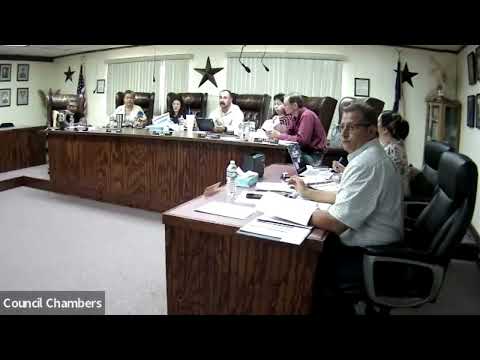
Councilors at the Alpine workshop reviewed proposed updates across the master fee schedule beyond water, focusing on security deposits, tap fees, tampering penalties, sewer and gas rate adjustments, and building‑permit administration.
Staff outlined recommended deposit increases: residential security deposits were proposed to rise from $200 to $250, small commercial deposits to $300 and larger deposits for industrial/agricultural/motel users remaining at $1,500. A council member noted deposits are custodial rather than revenue and asked whether the proposed increases better reflect losses when customers leave with unpaid balances.
The group also discussed water and sewer extension/tap fees. Operations staff said the current 1‑inch/4‑inch extension fees (listed at $30/$35) are intended to cover equipment and labor; council members suggested moving to a cost‑plus approach that more accurately reflects digging, restoration and equipment time for new taps.
Tampering enforcement drew attention after staff said the current $150 tampering fee (plus damages) may be too low to deter illicit connections. “I’ve seen a lot of tampering...we need to hit them hard,” an operations staff member said; council members proposed increasing the fine to between $300 and $500 as a stronger deterrent.
On sewer rates, staff and council discussed a potential $2 increase to move the flat residential sewer charge from $17.50 toward $20; council requested a sewer study and a clearer estimate of incremental revenue (staff cited roughly 2,900 sewer accounts) before adoption.
Jessica, building services official, told the council the state’s rules constrained previous valuation‑based permit approaches and that permit revenue has been flat. She noted the new short‑term rental special‑use permit was added at $500 with a $250 annual renewal, but said receipts for those permits were currently routed to the hotel‑tax account rather than appearing in her department’s budget; council asked finance to reconcile account routing so departmental revenues reflect the workload.
Police staff recommended raising impound and storage fees for commercial motor vehicles to deter problematic truck traffic and discussed installing solar‑powered surveillance cameras to reduce liability at the impound lot. Airport and other miscellaneous fees were described by staff as reasonable and unchanged.
No fee changes were finalized at the workshop; the council directed staff to return with reconciled financials, cost‑of‑service calculations where needed and a capital plan before bringing any ordinance or resolution back for a vote.