Get Full Government Meeting Transcripts, Videos, & Alerts Forever!
Get email alerts on the Code Revision topic
No spam. Unsubscribe anytime.
Oconee County committee sets schedule to rewrite roads, design and zoning rules; public meetings planned
Summary
The county planning director presented a scope to revise Chapters 26 (roads), 32 (design standards) and 38 (zoning) of the Oconee County Code of Ordinances, proposing workshops, two public information meetings (July 29 and 30) and a Nov. 10 committee meeting to meet a Jan. 19 moratorium deadline.
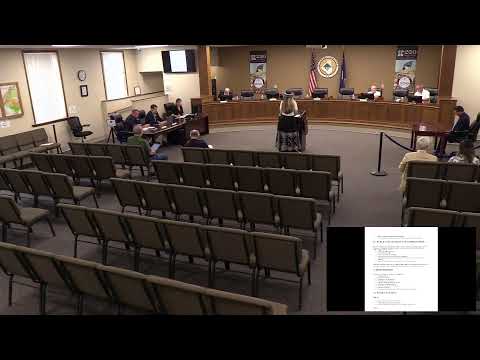
The Planning and Economic Development Committee of Oconee County reviewed a proposed scope of work on July 7 to revise Chapters 26 (roads), 32 (design standards) and 38 (zoning) of the Oconee County Code of Ordinances, Planning Director Diane Hester said. Hester told the committee the rewrite is intended to clarify roles, correct cross‑references and streamline the development review process so applicants and residents know what is required when they submit projects.
Hester said the scope notes which body — county council, the committee, planning staff and the planning commission — is responsible for each step and that staff will convene workshops with the planning commission to focus on specific tasks. "I will work with all parties, and then I would provide status updates to the committee," Hester said, summarizing staff responsibilities and the review structure.
The schedule in the backup materials includes two public information meetings to gather comment and a website comment option; Hester said that collected comments will be compiled and presented to council. The committee chair confirmed the public meetings are set for July 29 at 2 p.m. and July 30 at 6 p.m.
Because a development moratorium affecting parts of the code has a sundown date of Jan. 19, Hester asked the committee to add an extra called meeting in November so staff would have time to finalize revisions and present them to the committee and then to council for the required readings. "We're looking at it as a hard deadline, not as something that's flexible," Hester said. Committee members discussed calendar constraints around the Nov. 3 election week and agreed to plan to present the final approved version from the commission and staff to the committee on Nov. 10 so it could be placed before council on Dec. 1.
The presentation addressed how the draft will treat minor versus major subdivisions. Hester said the working definition treats 10 dwelling units or fewer as a "minor" subdivision and 11 or more as "major." "Right now, that is classified as 10 units, lots, dwelling units or less is minor, and then 11 or more is major," Hester said, and she added the rewrite will expand and clarify how minor subdivisions are processed to prevent developers from subdividing repeatedly to avoid major‑project review.
There were no recorded formal votes on the code scope during the meeting; the committee approved the meeting minutes from May 19 by voice vote earlier in the session and then moved to adjourn. Next steps are the public information meetings later in July, the workshops and a Nov. 10 committee meeting to review the final proposed changes before council consideration.