Get Full Government Meeting Transcripts, Videos, & Alerts Forever!
Get email alerts on the Privacy topic
No spam. Unsubscribe anytime.
Privacy group alleges Pleasanton Police shared license‑plate reader data with federal agencies; council asks staff to investigate
Summary
A representative from Oakland Privacy told the council July 7 that a public‑records request indicates the Pleasanton Police Department shared ALPR (license‑plate reader) data with federal border agencies, citing SB 34 and a California DOJ bulletin; council and staff said they would look into the claim.
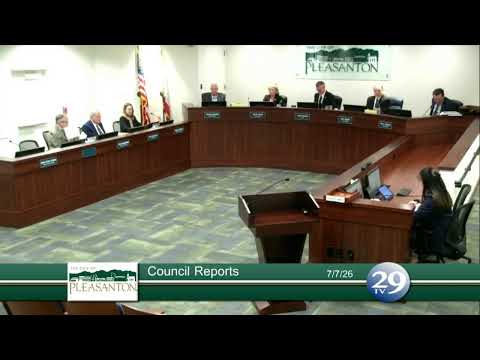
During the public‑comment period at the July 7 Pleasanton City Council meeting, Mike Caslakabe, director of research for Oakland Privacy, said a recent public‑records request showed the Pleasanton Police Department may have shared automated license‑plate reader (ALPR) data with federal border agencies.
Caslakabe cited state law—SB 34—and an October 2023 California Department of Justice information bulletin reminding agencies that SB 34 does not permit California law‑enforcement agencies to share ALPR information with private entities or out‑of‑state or federal agencies. He also cited the Pleasanton Police Department policy language on ALPR audit requirements and suggested audits may be missing or insufficient.
"Not only is it disappointing that the agency tasked with enforcing the law is itself failing to follow the law, its actions may have endangered the residents," Caslakabe said, urging a transparent investigation and accountability for any violations.
Councilmembers asked staff to follow up; the police chief (on the dais) said the claim was "not something I'm aware of" and staff agreed to look into it. The matter was not resolved at the meeting; staff committed to investigate and report back.
Council did not take formal action on the allegation during the meeting. The claim and staff’s follow‑up remain unresolved in the public record as of the close of the meeting.