Get Full Government Meeting Transcripts, Videos, & Alerts Forever!
Get email alerts on the Budget Reallocation topic
No spam. Unsubscribe anytime.
Harrisburg Council Advances $1.9M Reallocation to Pay Park Vendors after Missed HUD Deadline
Summary
Council members pressed city staff on why multi‑year park projects missed HUD deadlines and required a $1.9 million internal reallocation to cover vendor invoices; staff said finishing work reduced a potential $12M clawback to roughly $2.3M and recommended paying vendors to limit losses.
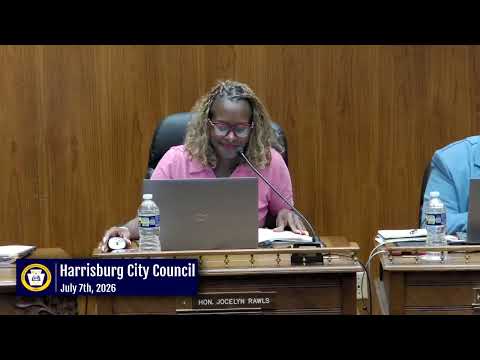
Harrisburg City Council’s July 7 work session focused in part on a proposed $1.9 million reallocation to cover unpaid vendor invoices tied to several federally funded park projects that missed HUD deadlines.
Councilmembers pressed city staff for a detailed accounting and an explanation of how projects slipped past multiple extension dates. City staff said the reallocation is intended primarily to pay vendors for work already incurred and to complete projects so the city avoids a larger HUD clawback. According to staff, multiple extensions had been granted and March 3, 2026, was the final extension. Had work stopped on that date, staff said the city risked returning substantially more of the grant awards — staff estimated a possible callback of “closer to $12,000,000” — but by continuing and finishing critical elements, the net exposure was reduced to about $2.3 million; the proposed reallocation would cover roughly $1.9 million of that liability.
Project managers and public‑works staff described several causes of delay, including contractor turnover, supply‑chain and materials‑cost increases, early heavy snowfall that halted surfacing work, a utility line strike at Wilson Park, and transitions in departmental oversight (notably a transfer of park responsibilities from facilities to public works). Staff acknowledged there had been multiple project managers over the life of the work and said they would standardize future approaches by assigning a single project manager, involving planning and engineering earlier, and conducting more rigorous site reviews before contract awards.
Council members repeatedly criticized the timing and scope of communication to Council and to the public. Several members said they first learned the magnitude of the problem after media reports and called for earlier briefings when extensions or deadline risks emerge. “If we had had that information as of March 3, the public conversation would be different,” one councilmember said.
Finance staff outlined budget offsets proposed to cover the reallocation: $500,000 from a facilities special‑projects line, $75,000 from streets and roads, interfund transfers from state grants (including accumulated interest), and amounts drawn from the parks and recreation fund (about $300,000). The administration described those changes as internal reallocations rather than cuts to currently active, uncompromised projects.
Vice President Jones moved Resolution 55 (the $1.9M reallocation) to the next legislative session for a formal vote; council did not take a final vote during the work session.
The work session also included public comment urging better grant management and asking for a public forum to review the parks projects and decision points that led to the missed HUD deadlines. City staff agreed to provide the council with additional documentation, loan figures, and budget pages before the legislative session.
Next steps: Resolution 55 will be considered at the next legislative session; staff promised follow‑up reports with project‑level accounting and a written explanation of what would change in future grant administration.