Get Full Government Meeting Transcripts, Videos, & Alerts Forever!
Get email alerts on the Public Safety topic
No spam. Unsubscribe anytime.
Sheriff seeks equipment fixes, jail staffing changes and inmate‑billing reforms
Summary
Sheriff Schneider proposed equipment replacements and operational changes, including airboat repairs, pepper‑ball rounds, adjustments to overtime and inmate medical billing practices; commissioners debated buying out vehicles versus continuing leases and asked for follow‑up cost details.
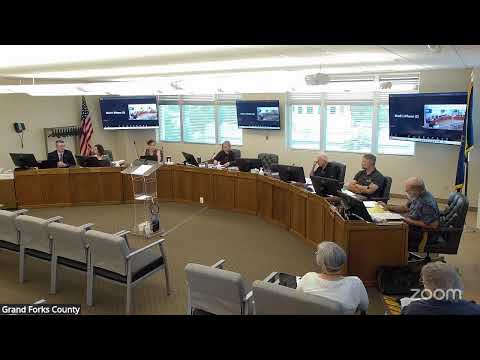
Sheriff Schneider briefed the Grand Forks County Board of Commissioners on the sheriff’s office and correctional center budget needs, outlining equipment replacement requests, a shift in staffing practices, and new approaches to recover inmate medical costs.
Schneider reviewed a range of requests for the sheriff’s office and the new facility — from a $5,000 storage facility maintenance request to replacing aging airboat hulls. "We have 2 airboats that … they've been around, I believe, for a decade or better," he said, and described a $12,000 estimate to repair one shell and a larger replacement need within two years for the other.
On nonlethal options Schneider said the department is evaluating pepper‑ball rounds to replace beanbag shotguns, noting the rounds are cheaper and ‘‘extremely effective’’ in his assessment and could reduce long‑term costs if the department phases out beanbag munitions.
The sheriff and jail administrators also proposed operational adjustments to the correctional center: moving from 8‑hour shifts to 12‑hour shifts for better coverage (with a moderate cost increase), reducing some holiday/on‑call or insurance line items, and centralizing printing to lower photocopy/ink costs.
A major discussion point was inmate medical costs. The jail reported historically high medication and medical expenses but described steps to recover a portion of those costs by billing inmates and ensuring appropriate entities are charged. "We're passing 600 medications a day," the sheriff said; staff described implementing billing procedures and pursuing contract revisions with Altru to obtain more favorable rates. Staff emphasized that full cost recovery is not expected, but better billing and review could reduce net county outlays.
Fleet strategy proved contentious: commissioners and staff debated the merits of continuing a leasing model with Enterprise against buying out vehicles to eliminate interest costs. Commissioner Bierke argued a buyout and a cash‑reserve strategy could save money over time. The sheriff and staff acknowledged both approaches and agreed to pursue additional analysis and possible buyout opportunities where feasible.
Commissioners asked for further detail — including a day‑in‑time breakdown of prisoner housing (county, city, federal inmates) and clearer cost impacts of the proposed shift patterns, medical billing changes, and any tradeoffs between one‑time repairs and recurring program costs. No final budget votes were taken; staff were asked to return with written cost analyses.