Get Full Government Meeting Transcripts, Videos, & Alerts Forever!
Get email alerts on the Wildlife Conservation topic
No spam. Unsubscribe anytime.
Conservation biologist surveys salt‑marsh fireflies at Manahawkin, warns some species may be at risk
Summary
Richard Joyce of the Xerces Society led a Firefly Atlas survey at the Manahawkin Wildlife Management Area, collecting flash‑pattern recordings and specimen photos to document salt‑marsh species he said "could be in trouble." He cited an IUCN assessment that found between one‑sixth and one‑third of North American firefly species may be at elevated extinction risk.
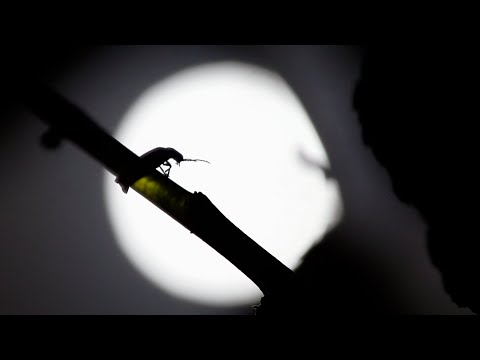
Richard Joyce, a conservation biologist with the Xerces Society for Invertebrate Conservation, led a field survey at the salt marshes of the Manahawkin Wildlife Management Area to document firefly species that specialize in marsh habitat. The survey, conducted in partnership with the New Jersey Department of Environmental Protection Division of Fish and Wildlife, follows the Firefly Atlas protocol coordinated by the Xerces Society.
Joyce said the team is focusing on two kinds of data: the flash patterns that help distinguish species and captured specimens that are photographed from above and below for identification. "Different species kind of have their own rhythm and their own choreography they do each night," he said, explaining why flash patterns are an important diagnostic trait.
The work aims to fill large data gaps. "We don't have exact numbers for a lot of these firefly species," Joyce said, noting a lack of long‑term monitoring for many taxa. He cited a conservation assessment by the IUCN firefly specialist group that evaluated more than 130 North American species and found "somewhere between 1 in 6 and 1 in 3 firefly species may be, at a higher risk of extinction." Joyce said threats include pesticides, light pollution, habitat loss and climate change.
Joyce said documenting where species occur and in what numbers will "lay the groundwork for future monitoring and just managing for these species where we find them." He framed the effort as both an ecological necessity and a social value: while many people overlook insects, he said, "I really don't know anyone, who doesn't love fireflies," and described the cultural importance of fireflies as linked to childhood memories.
The survey results will be recorded under the Firefly Atlas protocol and used to inform future monitoring and management. Joyce said the Xerces Society coordinates the Atlas and that the data will help identify where targeted conservation actions may be needed.