Get Full Government Meeting Transcripts, Videos, & Alerts Forever!
Get email alerts on the Animal Control topic
No spam. Unsubscribe anytime.
Owego board weighs rooster controls, removes proposed jail time from draft ordinance
Summary
After weeks of public comment and staff input from Cornell Cooperative Extension, the Owego village board accepted staff edits to a proposed ordinance regulating rooster noise and directed removal of imprisonment as a penalty, endorsing civil enforcement and humane mitigation options like a 'night box.'
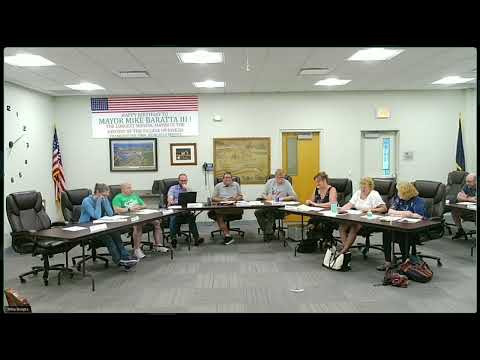
The Owego village board spent a substantial portion of its meeting discussing a draft ordinance aimed at regulating backyard rooster crowing, hearing residents’ experiences and technical recommendations from staff.
Staff member (Speaker 8) reviewed the draft definitions — including criteria for when a hen’s crowing could be classified with roosters — and presented three mitigation options Cornell Cooperative Extension recommended: a restraining 'velcro' band (not recommended by Cornell), surgical alteration (deemed problematic) and a so-called night box, a darkened enclosure shown in trials to reduce crowing by limiting light exposure. “The night box is the most humane thing,” a resident cited in the discussion said, summarizing Cornell’s guidance presented by staff.
Residents and board members described the problem as localized but vocal. The chair (Speaker 2) summarized online reaction, noting hundreds of Facebook comments with a majority not in favor of banning backyard poultry but expressing concerns about early-morning crowing and how to validate anonymous online complaints. Public commenters raised animal-welfare questions about restrictive bands and the heat/ventilation needs of an enclosed device.
Board discussion focused on penalties. Staff (Speaker 8) told the board that, in 15 years of practice, criminal sentences for code-enforcement livestock cases were very rare and typically reserved for extreme, repeated noncompliance. Several members and commenters asked the board to avoid criminalizing ordinary backyard-keeping. A motion was not needed: the board directed staff to remove imprisonment language and to reissue the draft with a redline showing the change. “I’ll redline that out of there,” staff said in response to board direction.
Next steps: staff will circulate a revised draft with the jail-time language removed and bring the ordinance back to the board for further review and possible scheduling of a public hearing; the board emphasized any enforcement approach should include documentation of complaints and a clear standard of proof before penalties are applied.