Get Full Government Meeting Transcripts, Videos, & Alerts Forever!
Get email alerts on the Museum Veterans Display topic
No spam. Unsubscribe anytime.
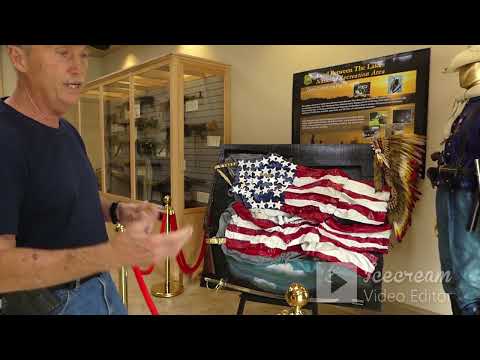
Museum director unveils Stewart County display honoring Medal of Honor recipient
Summary
The director of Stewart County’s Museum of Military Culture described a newly dedicated exhibit honoring a Medal of Honor recipient, the museum’s oral-history work recording World War II, Korean and Vietnam veterans, and plans to relocate the county’s war monuments to a new Visitor Center plaza.
The director of the Museum of Military Culture at the Stewart County Visitor Center described a recently dedicated exhibit honoring a local Medal of Honor recipient and outlined the museum’s ongoing effort to record veterans’ stories and preserve military artifacts.
The director, who identified themself as the Museum of Military Culture’s director and said the organization is run as a 501(c)(3), told the audience the new display was dedicated "last Sunday" and that "The William Morris will be on permanent display." He said the museum began after his retirement from military service and contracting work and that volunteers and donors have helped assemble artifacts and oral histories.
"We started recording veteran stories because back then there was only 4 World War 2 veterans left," the director said, describing an early push to capture firsthand accounts. He said the project recorded four World War II veterans and has since added accounts from Korean War and Vietnam-era veterans; the director also named Ron Rosser as a Korean War Medal of Honor recipient who lived in Stewart County after service.
The director described the William Morris exhibit as a composite of objects and symbolism meant to reflect the honoree’s life: cavalry uniform, pistol, and embedded tools associated with horse care, plus iconography intended to trace his career and life stages. He credited Russell Metzger with creating and donating the depiction of the honoree to the museum.
In addition to the permanent William Morris display, the director said the museum maintains rotating exhibits on a quarterly schedule that have covered conflicts from about 1900 through World War II, and that current displays include a range of weapons and artifacts from U.S., German and Russian forces.
The director said a concrete pad poured in front of the Visitor Center will be used to relocate the county’s war monuments from the courthouse to a single, visible focal point at the Visitor Center so passersby can see the monuments and then enter the museum.
He framed the work as part of a mission to "save one piece of history at a time," arguing that local history must be recorded and presented for future generations. He closed by inviting residents to visit the Visitor Center to see the permanent William Morris display and the rotating exhibits.
The museum’s nonprofit status, the oral-history project, the quarterly rotation schedule, and the Visitor Center monument relocation were the principal developments the director highlighted; the remarks did not include formal government actions, a funding breakdown or specific dates beyond the single reference to the recent dedication.