Get Full Government Meeting Transcripts, Videos, & Alerts Forever!
Get email alerts on the Fund Reserves topic
No spam. Unsubscribe anytime.
Finance committee warned of dwindling general-fund excess reserves; staff outlines options
Summary
City finance staff reported a multi-fund review showing a $42.5M general-fund balance (cash $37.1M) with an $11.2M advance to CIP restored after bond issuance; staff warned excess reserves have been drawn down and presented options including targeted reserve-policy changes and limited use of enterprise excesses.
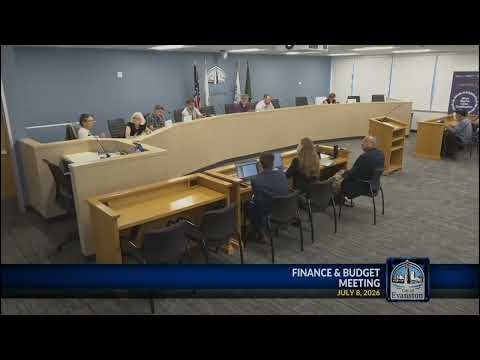
City finance staff told the Evanston Finance & Budget Committee on July 8 that audited FY2025 fund and cash balances show the city has drawn down excess reserves in recent years and may face a tight 2027 budget unless revenues increase or expenses are reduced.
Mr. Black, presenting the fund-by-fund analysis, said the audited general fund reported a $42.5 million fund balance and $37.1 million in cash at year end; an $11.2 million advance to the capital improvements (CIP) fund made the year-end unassigned fund balance appear lower in the audit but bond proceeds issued in June returned that advance. "At year end, the general fund had an $11,200,000 advance to the CIP fund," Mr. Black said.
Staff highlighted differences between cash and audited fund balances across funds (examples: E911, which shows restricted fund balance but lower cash because state payments arrive in January and February; the CIP fund, which finished with a large negative unassigned balance but was restored after $24 million in bonds were issued; water and sewer funds with vouchers payable and unissued bond proceeds affecting balances). The audit shows an unassigned general fund balance of $16.5 million, but once the CIP advance was returned, Mr. Black said an adjusted unassigned position was $27.7 million.
Committee members focused on reserve policy choices. Committee member Livingston said the general-fund drawdown was expected because the council decided to step up public-safety pension contributions; he urged maintaining the funding plan while the committee explores revenue options. Council member Kelly raised the large carrying-cost ratio for debt and urged caution about additional borrowing and strict compliance with IDOT/MFT procurement rules to avoid later disallowances.
Staff reviewed the 17 funds that have formal reserve policies and where reserves could be considered. The sewer fund was identified as the clearest potential source of excess reserves, though staff cautioned that auditors typically frown on sweeping enterprise funds to plug general-fund gaps. Mr. Black said other funds are restricted, committed or otherwise dedicated (Crown contributions, affordable housing, TIFs, ARPA), limiting flexibility.
The committee asked staff to return in August with concrete options for revenue increases, expense reductions, or reserve-policy adjustments to help avoid a projected $12 million budget deficit for 2027. Members also asked that potential adjustments and reconciliations with Cook County and IDOT be tracked and reported to the committee.
What happens next: staff will bring a budget-item agenda in August that evaluates reserve policy changes, possible interfund transfers, and revenue options; the committee scheduled continued budget discussions in August.
Sources: Fund and cash balances presentation by Mr. Black; committee discussion July 8, 2026. Quotes are from the committee record.