Get Full Government Meeting Transcripts, Videos, & Alerts Forever!
Get email alerts on the Community Concerns topic
No spam. Unsubscribe anytime.
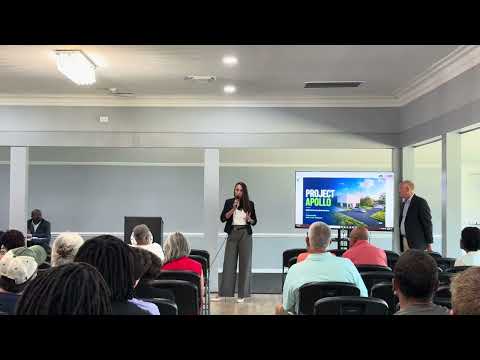
Residents press Project Apollo presenters on transparency, noise, wildlife and past industrial pollution
Summary
At a Marlboro County meeting about Project Apollo, residents pushed presenters on noise levels, water use, wildlife impacts and whether companies target poorer communities; long-time resident Scott Thompson cited a local dye house and alleged lingering carcinogen risks.
Residents used the information session to press presenters on environmental and outreach concerns tied to Project Apollo, asking whether the company’s plans would harm wildlife, raise utility costs, or repeat historic industrial pollution.
Dr. Brandon criticized the format of outside outreach and questioned whether companies and consultants often "look for poorer communities that need the money," urging clarity and nonpartisan evaluation. The comment prompted a back-and-forth about bias in outreach and the role of lobbyists.
Scott Thompson, who said he has lived in the area for five decades, told the meeting he compiled a list of businesses that arrived and later left the county and recalled a local dye house that "had all kinds of chemicals, most of which are carcinogens," asking whether new projects would leave similar legacies.
Presenters responded with mitigation and procedural assurances. Rochelle and Craig described habitat features—pollinator gardens and living green walls—and said they aim to limit external sound through design and equipment placement. Rochelle said much of the sound remains inside the building and presenters cited a reference point of roughly 60 decibels at the fence line for outside noise.
Tony DeNeil, who introduced the session, told attendees elected officials would be kept informed and said agreements would include contractual terms intended to hold the company to hiring and community commitments. "The company is committed to... paying the infrastructure upgrades," he said, and he said county officials would have opportunities to participate in reviews prior to any company arriving.
The session did not include a binding county vote or final agreement; presenters said Project Apollo remains an active, unannounced proposal and that they are still competing with other communities. Residents asked for more independent information and formal commitments to be recorded in writing as the review process proceeds.