Get Full Government Meeting Transcripts, Videos, & Alerts Forever!
Get email alerts on the TDR PDR Preservation topic
No spam. Unsubscribe anytime.
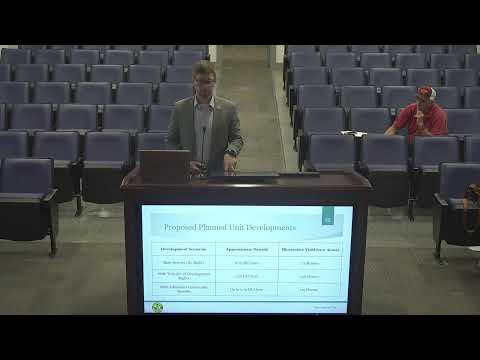
Louisa County staff outline TDR/PDR plan to steer growth into growth areas and preserve rural land
Summary
Planning staff presented a package of long‑term preservation tools — transfer of development rights (TDR), purchase of development rights (PDR) and conservation incentives — to concentrate development in designated growth areas and protect rural agricultural and forested land. Commissioners discussed lot‑line removal to increase TDR supply and asked staff to return with a draft ordinance.
Chris, a county planning staff member, told the commission that Louisa County is considering a three‑part preservation strategy: transfer of development rights (TDR), purchase of development rights (PDR), and possible conservation incentives tied to a growing preservation fund.
On TDRs, staff described a voluntary, market‑based program in which development rights are sold by owners in designated sending areas (A‑1 and A‑2 parcels outside growth areas) and purchased by developers to increase density inside receiving areas (A‑1/A‑2 in growth areas, R‑1/R‑2, and PUDs). "Based on Virginia code, those development rights are permanently retired from the sending property and cannot be recreated," Chris said, explaining the mechanism that yields permanent rural preservation.
Staff proposed receiving‑area density bonuses (e.g., up to a 100% density bonus in R districts) awarded in return for purchased TDRs; PUDs would receive additional density based on a scoring chart reflecting community benefits (affordable housing, land donation for municipal use, etc.). To increase available TDR supply, Commissioner Todd proposed allowing lot‑line removal and parcel recombination in rural areas so owners of many small or poorly configured lots could join parcels, qualify to receive recorded division rights, and sell them. Todd also urged requiring a surveyor for every transaction to ensure accurate plats and county recordation.
"It's a way for substantially more citizens to be able to participate," Todd said, describing examples in which merging adjoining small lots would create eligible sending parcels and increase the product on the market for developers. Commissioners discussed legal constraints (state code and market balance requirements) and the county’s role as a clearinghouse — staff would maintain a library of sellers and their contact information rather than purchase rights directly.
On PDRs, staff proposed a voluntary 10‑year purchase program that would compensate participating landowners based on assessed land value, using a waterfall scoring method (prioritizing road frontage, acreage and division potential) to allocate limited funds to the parcels most susceptible to development. Staff noted eligibility would likely be limited to A‑1 and A‑2 parcels outside growth areas and that Ag‑Forestal District enrollment typically intersects with PDR payment timing and contract terms.
Commissioners raised implementation questions — staffing capacity, program pacing, and market balance — and asked staff to prepare a refined draft ordinance. Chris said he would aim to present a draft ordinance by August and that the item would then be scheduled for public hearing.