Get Full Government Meeting Transcripts, Videos, & Alerts Forever!
Get email alerts on the Permits And Transport topic
No spam. Unsubscribe anytime.
Emmons County officials vow tighter permit checks and weight verification for battery storage deliveries
Summary
County leaders called for stricter checks after finding inconsistent load-permit fees and missing scale tickets for trucks hauling battery containers; staff proposed blocking unlisted trucks at a staging area, requiring scale tickets and having on-site staff verify loads before unloading.
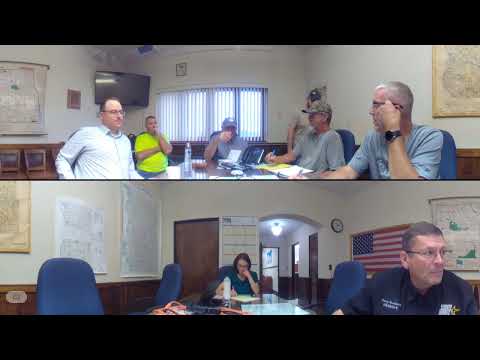
Emmons County officials held a special meeting to address inconsistent permits and missing scale tickets for semi shipments to a battery storage construction site, saying some loads showed widely different permit fees for seemingly similar weights.
The meeting opened with Chair Gary saying the special meeting was called after staff found permit fees ranging from roughly $26 to as much as $2,100 for loads that appeared comparable and after several trucks arrived without scale tickets. "The reason for the special meeting is because of the problem that's going on out there on-site with the battery storage facility," Gary said, noting multiple loads were staged and some stayed overnight in Linton.
County staff and project representatives centered the discussion on two fixes: make sure on-site staff can see and validate permit applications before trucks reach county roads, and require scale tickets that follow each load. "These are coming from LG itself, the actual maker of the batteries," said Clint, describing the transport chain, and added that the county will stop trucks not on the approved permit list: "If they don't have it, they're not coming in."
Participants explained how the county''s online load-pass permit system works and why fees vary. One participant summarized the calculation: excess pounds are converted to tons, multiplied by $5 per ton per mile and then multiplied by mileage, a sequence that can turn a modest fee into a thousand-dollar charge with small differences in reported weight or route. "If you take an identical permit, but yet he's at 80,000, he's a $100 and or $26 because he's within his legal limits," a staff member said, illustrating how license weight and gross weight drive the fee differences.
Several speakers urged requiring a scale ticket from the point of loading so the permit matches the truck's actual weight on arrival. A county-hired verifier, Ron Dykema, was identified as the person who should receive copies of permits and scale tickets and confirm weights on-site; Ron would report discrepancies to his supervisor Russ, who could escalate to the commission chair or sheriff if necessary. "If the driver can produce a scale ticket and that correlates with the permit system, that should be good to go," one participant said.
Staff discussed placing a certified scale at a staging area (for example, near DFC or the Strasburg Farmers Elevator) so trucks can be weighed before they travel county roads; participants noted limits such as certification, DOT scheduling and liability for very heavy loads. The group also discussed shifting some permit-approval responsibility off busy auditor staff to on-site reviewers who can spot mismatches in real time.
No regulatory penalties were adopted at the meeting, but officials said they were prepared to block unpermitted trucks and, if necessary, pursue enforcement or penalties against the project contractor or carrier if documentation proved false. The meeting closed after the chair moved to adjourn and the motion was seconded.
The next steps identified by the group included: ensuring Allen (on-site superintendent) and Ron have access to the permit system; having Ron and Alan verify pending loads and report results to Russ; printing permit examples for on-site comparison; and exploring a certified scale at a staging area before trucks enter county roads.
The commission did not adopt new written policy at the meeting; staff said they would implement the described operational checks and report back if further formal action is needed.