Get Full Government Meeting Transcripts, Videos, & Alerts Forever!
Get email alerts on the Personnel Planning topic
No spam. Unsubscribe anytime.
Council approves amendment to salary ordinance to restructure planning roles
Summary
The Pendleton Town Council voted to amend Ordinance 26‑06, restructuring planning department roles (converting the planning director role to a senior planner hourly equivalent) and authorizing staff to post job descriptions aimed at rebuilding the planning team; the measure advanced after suspension of the rules and a council voice vote.
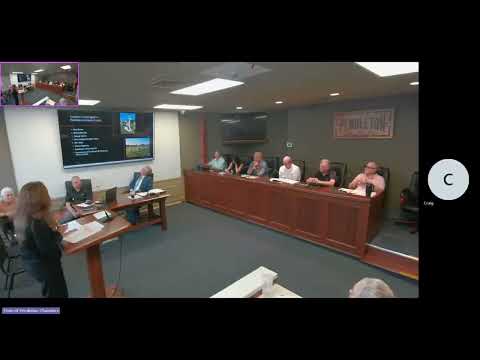
Pendleton’s Town Council approved an amendment to the 2026 salary ordinance on July 9, authorizing a restructure of the town’s planning department and moving the opening position toward a team‑based staffing model.
The amendment converts the current planning director/supervisory structure into lateral, team‑based roles (a senior planner, associate planner and zoning/technician tracks). Planning director Denise (speaker 2) told the council the change follows a benchmarking review of neighboring jurisdictions and legal guidance that non‑supervisory positions should be hourly under state statutes; the ordinance specifies hourly equivalents intended to match the existing salary compensation.
Denise described the town’s need for added capacity as development activity increases and recommended posting a senior planner job (roughly five years’ planning experience preferred and AICP certification sought or required within the first year if not already held). She said the town’s finance lead (Reedy) confirmed fiscal capacity to support hiring in 2027 and that the administration plans to revisit staffing needs at year‑end.
Council President (speaker 1) solicited a motion to amend and then a motion to suspend the rules to move the ordinance from first to second reading. Council conducted voice votes and recorded ‘ayes’ to suspend the rules and then to adopt the ordinance on second reading; the transcript records voice approval but does not include a roll‑call tally of individual votes.
Why it matters: Council leaders said the reorganization is intended to speed permitting and make the department resilient amid rising development and additional reporting requirements tied to the town’s comprehensive and downtown revitalization plans. The change also aims to make the planning team more flexible for project‑based work and commission support.
Next steps: The administration will post job descriptions and pursue hiring, with the administration targeting a fall onboarding and consideration of additional positions during 2027 budget planning.