Get Full Government Meeting Transcripts, Videos, & Alerts Forever!
Get email alerts on the Budget Stormwater topic
No spam. Unsubscribe anytime.
Columbus reviews 2026 budget and a proposed $15/month stormwater utility
Summary
City staff presented a first draft of the 2026 budget and urged council direction on a proposed stormwater utility that staff says would generate roughly $802,881 annually at a $15 monthly charge for single-family homes; council members requested more precise household-impact projections before any decision.
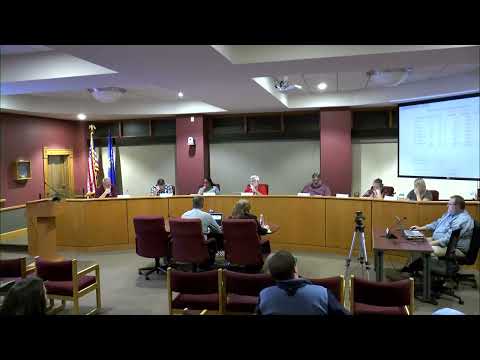
City staff opened the Committee of the Whole meeting on Oct. 7 with a first work session on the proposed 2026 budget and a detailed introduction to a proposed stormwater utility intended to fund priority drainage and street projects.
City staffer Matt told the council the process timeline: this is the first work session, staff will present updated budget numbers next Tuesday, an ad must be published by Oct. 19 to allow a Nov. 4 public hearing, and final council action could follow later in November. He identified key revenue and cost drivers for 2026, including a $26,000 increase in state shared revenue, an increase in expenditure restraint of roughly $18,000, a 3% across-the-board wage increase (about $100,000), and a projected $150,000 cost increase tied to the police contract.
Matt framed the budget choice around the levy: the proposed budget in front of council would place the city's portion of the tax bill under the current assumptions at a figure staff said would effectively mean a $41.45 increase on an average assessed home after adjustments. To qualify for the state's expenditure restraint program (a 3% limit over last year's general fund), staff said the city needs to cut roughly $260,000 from the current proposal.
To help meet that gap, staff presented a plan to create a stormwater utility and move stormwater expenses out of the general fund. Matt said the five-year stormwater and related street projects they have prioritized total roughly $3.9 million and that implementing a utility with a residential ERU charge of $15 per month (a $180 annual charge for a single-family home) would generate about $802,881 in revenue and yield roughly $59,000 in net general-fund savings compared with the status quo. "The monthly residential ERU charge would be $15 to a single family home," Matt said during the presentation.
Council members pressed for more specificity. One councilor said they would not support the utility without a "hard and fast projection" of what typical household bills will look like and how the fee would be implemented; another asked for the median bill impact across the city and for a scenario that shows the budget both with and without the utility. Matt agreed to prepare more detailed numbers for the next meeting and said staff would present the sequence of implementation steps and options for collecting the fee (including whether it could appear on the tax bill).
Department heads then presented their program and capital priorities. Highlights included staggered equipment replacement in public safety to avoid large single-year spikes; increased EMS contractual costs; community development projects and façade grants for downtown; and library and recreation revenue initiatives. Dwayne Millard, public works director, discussed parks work and fielded detailed questions about a recent decision to use goats to maintain an area previously used for deer, including the unknowns around veterinary costs and staff-time comparisons.
Matt repeatedly told council members that staff will return with a revised budget next Tuesday that incorporates additional cuts and the data council requested. "I have a budget that accomplishes that," Matt said, referring to meeting the expenditure restraint program target once adjustments are accounted for and after any stormwater-utility choices are considered.
Next steps: staff will publish updated packet materials before next Tuesday's meeting and provide household-level projections, implementation steps for the stormwater utility, and options for the council to consider. No formal action was taken on the utility during the Oct. 7 work session; the council signaled it wanted clearer bill impacts and implementation details before a vote.