Get Full Government Meeting Transcripts, Videos, & Alerts Forever!
Get email alerts on the Biosolids Handling topic
No spam. Unsubscribe anytime.
Columbus utility commission votes to add dryer to wastewater biosolids project after debate over cost, storage
Summary
The Columbus Utility Commission voted Aug. 21 to include a dryer in the wastewater treatment plantbiosolids project to meet a DNR 180-day storage requirement, approving the change on a 4-0 roll call after hearing a consultantpresent a comparative analysis of costs, schedule and operational trade-offs.
The Columbus Utility Commission on Aug. 21 directed staff to incorporate a dryer into the wastewater treatment plantbiosolids handling project, voting in favor of the change after a discussion about storage shortfalls, costs and manufacturer risks.
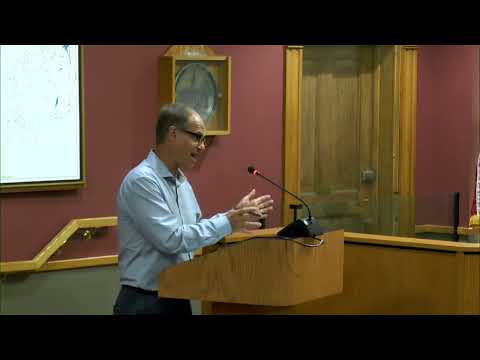
Dave Arnott, a consultant with Brookert Milke, told the commission the Department of Natural Resources requires 180 days of biosolids storage and said the citycurrently produces roughly 816 cubic yards every six months while available storage is about 800 cubic yards at four feet of stacking. "We would have to explain to the DNR we think by doing these 3 or 4 things, we can meet the hundred and 80 days," Arnott said, describing a lower-cost option that replaces the belt press with a volute press and adds compartment walls and ventilation.
Arnott presented two options. Option 1 (a new volute press plus building modifications) is lower cost and would keep the current bidding schedule (planned for December 2025) and construction in spring 2026, but he warned it carries an "outside chance" of still falling short of the DNR requirement. "The approach would not cause a delay in bidding," he said of that option.
Option 2 adds a mechanical dryer to the design now. Arnott said including the dryer would meet the 180-day storage requirement "without a doubt" and yield a dry product farmers preferred in pilot testing. He estimated the full project cost with a Chinese-made dryer would be about $3.4 million and said other dryers from U.S. manufacturers could cost about $6 million to $6.5 million. Arnott cautioned additional cost uncertainty from tariffs and manufacturer responsiveness: the manufacturer is China-based, "it's unclear how tariffs will play into the affected price," and he reported concerns about poor communication and limited local support from that vendor. The transcript uses multiple spellings for the vendor ("Shinse," "Shinsy," "Shinsi"); meeting materials named the vendor as Shinse.
A commissioner asked whether enzyme addition currently used at the plant would continue. A wastewater plant operator told the commission the enzyme program would stop: "We are not going to be doing the enzyme addition anymore because the cost of the enzymes compared to the cost of hauling the biosolids to the field... it's not cost effective at all." Arnott said the enzyme provided only marginal benefit and was very expensive relative to other options.
Arnott estimated the incremental cost to add the dryer now at about $1,000,000 to $1,500,000 (he described the upper figure as a conservative buffer based on earlier pricing) and said doing the dryer now would delay bidding approximately one year (to Dec. 2026) with construction in 2027 because of added engineering and procurement time. He also said operation and maintenance costs would rise by roughly $33,000 per year for energy and parts.
After discussing plastics visible in pilot samples (small white pieces that may come from upstream dischargers), equipment access (loader turning radius) and manufacturer trade-offs, a committee member moved to approve Option 2 to include the dryer. The commission conducted a roll call and recorded four aye votes with no recorded no or abstain votes; the motion passed. The commissiondid not record a named second in the audible transcript.
Next steps, as described during the meeting, are for staff and the consultant to incorporate the dryer into the design work, proceed with necessary engineering for the revised timeline, and prepare the required submittal to the DNR (Arnott identified a Sept. 30 submittal milestone). Arnott said Rooker Milke would complete the engineering work between now and the DNR submittal; he confirmed to the commission "we'll be ready either way."
The commission then moved to routine departmental reports and adjourned at about 6:30 p.m.