Get Full Government Meeting Transcripts, Videos, & Alerts Forever!
Get email alerts on the Streets topic
No spam. Unsubscribe anytime.
City engineer briefs council on street ratings, urges steady maintenance funding
Summary
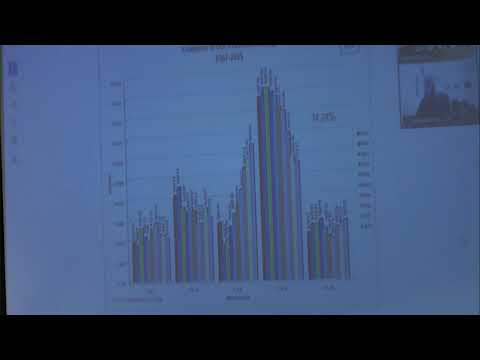
City engineer Jason Letha told the council the state requires biennial road ratings tied to state-local road aid and reported about 74.24% of Columbus streets rate between 5–10. He urged investing in crack sealing and timely maintenance to avoid costly reconstruction cliffs.
Jason Letha, who presented the city’s pavement-rating program, told the council the state requires biennial road ratings and that the assessments drive state-local road aid. "The state requires us to do this, so every other year...we have to do the ratings," he said, explaining the ratings inform maintenance and funding decisions.
Letha summarized how the 1–10 rating system corresponds to treatments: nines and tens indicate nearly new pavement, sevens and eights are candidates for crack sealing, and roads in the 1–3 range typically require reconstruction. He said Columbus maintains roughly 27 miles of paved streets and that about "74.24% I calculated are in that 5 to 10 rating range," which the state considers fair or better.
The presentation focused on common causes of pavement failure, with Letha emphasizing drainage problems. "The main reason roads fail is stormwater," he said, noting water intrusion into the subgrade accelerates deterioration and leads to rutting and potholing. He recommended that drainage improvements be part of rebuild projects and explained why utilities are a significant cost driver: for many reconstructions the underground sewer and water work effectively doubles the total project cost.
Letha walked through maintenance strategies and relative costs, urging early interventions. "The difference between maintenance cost and rebuild costs are about 10 to 1," he said, arguing for consistent crack sealing, slurry/seal coats and overlays to extend pavement life and avoid expensive pulverize-and-rebuild projects.
Councilors pressed for project-level estimates and program timing. Letha said staff will pursue engineering contracts to refine cost estimates for the West School Street (2026) project and that the city is applying for LRIP discretionary funding that could cover a substantial share ("around $400,000–$500,000") if awarded. He also noted that maintenance spending historically averaged about $75,000 annually and that engineers had recommended roughly $500,000 per year for reconstructs and $50,000 for crack sealing to meet long-term CIP goals.
The presentation closed with procedural next steps: staff will update the 10-year street plan in August, refine cost estimates under contract for large projects, and return to council with recommended CIP adjustments.
Ending: The council did not vote on funding at the meeting; members asked staff to bring an updated 10-year street plan and refined estimates to the August CIP discussion.