Get Full Government Meeting Transcripts, Videos, & Alerts Forever!
Get email alerts on the Public Safety Facility topic
No spam. Unsubscribe anytime.
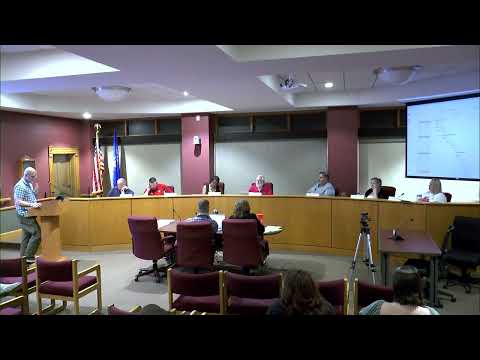
Columbus approves agreement with Rupert Milke for proposed public-safety facility
Summary
The City Council approved an agreement with Rupert Milke (with Acxiom and OPN) to begin design and programming for a new public-safety facility, after a presentation on team approach, budget assumptions and stakeholder engagement. Council members pressed for liaison involvement and cost controls.
Council members voted to enter into an agreement with Rupert Milke to advance planning for a consolidated public-safety facility that would house police and fire services.
Jason Letha, introduced to the council by a city staff member, and Rob Decker, building services manager for Acxiom, described a one-stop building-services approach that pairs project management, engineering and construction oversight with OPN as the proposed architect. Decker said the firm uses a fixed-fee structure "and we won't increase our set fee" while reducing the fee if the building cost comes in lower than projected.
The presenters said the outreach and design process would begin with a small stakeholder group that would include council liaisons and public-safety leadership, followed by limited public input sessions and periodic progress reports and online project updates. Decker emphasized cost stewardship and suggested site visits to comparable facilities to inform programming.
Council members pressed several points. One lawmaker noted the roughly $28,350,000 feasibility estimate in the packet and asked how the firm had built in inflation and whether square footage assumptions could be reduced; Decker said the figure was based on feasibility study square footage and a market per-square-foot cost and that programming could reduce the footprint. Another council member raised concerns about competing priorities with the local school district; staff said they were coordinating discussions with the school superintendent and that the processes were not mutually exclusive.
A motion to enter into the agreement was made and seconded; the council approved the agreement by roll call (ayes recorded by Lawson, Finkler, Meyer, Roecky, Reid and Rostad). The council did not specify additional financial commitments when approving the agreement to proceed with design and programming.
Next steps identified by the presenters and staff included forming the stakeholder group, refining the building program, scheduling public input, and returning to the council with design details and cost opinions as the project moves from programming to design.