Get Full Government Meeting Transcripts, Videos, & Alerts Forever!
Get email alerts on the Solid Waste Transfer Station topic
No spam. Unsubscribe anytime.
Ware transfer station manager urges mixed-number-2 plastics recycling as commercial-hauler dispute surfaces
Summary
A Ware transfer-station presentation and public comments on May 11 renewed debate over commercial haulers’ use of the town facility and proposed reinstatement of plastics recycling. The transfer-station manager recommended mixed number‑2 plastics as the most practical near-term option and outlined staffing and equipment needs.
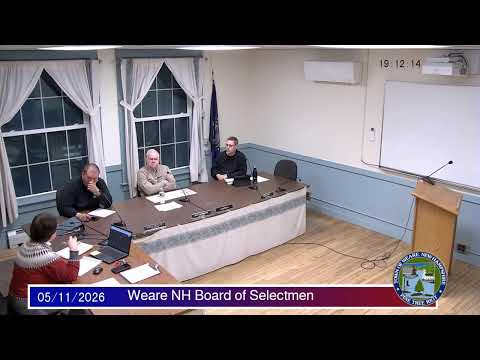
The Ware Select Board on May 11 heard a lengthy public exchange about commercial haulers’ use of the town transfer station and a detailed presentation from the transfer-station manager Jason about restarting plastics recycling.
Kilian Dolly, owner of K and R Disposal, told the board he believed some haulers are effectively being subsidized by town users because they do not use the transfer station. Dolly said he charges $10 a week to roughly 297 customers and described his role as a courier service: “I am strictly Uber Eats for trash.” Chair Jack Deebo responded with larger-scale municipal cost context, saying the town is facing higher costs and that "we're all feeling $300,000 for 2,800 households to take trash to Concord," most of it driven by tipping fees.
Jason, the transfer-station manager, described two operational concerns: prohibited items (propane tanks and small batteries) appearing in the metal container, which he said can trigger fines at the disposal facility, and staffing patterns that leave limited time for attendants to manage recycling. He proposed moving attendant schedules to a four-day pattern to give staff time for sorting and housekeeping and emphasized better monitoring of prohibited items.
On recycling, Jason recommended restarting plastics collection focused on mixed number‑2 plastics as the most practical option given current equipment and storage constraints. He provided market figures for context: natural (clear) number‑2 plastics at about $0.70 per pound, mixed number‑2 bales near $0.10 per pound, and said number‑1 plastics currently cost money to process. He told the board, “I would recommend that we go with number 2 mixed plastics for the most practical option for us,” citing limitations of having a single usable baler and the need for undercover bale storage.
Jason outlined operational steps and limits: accumulating a load could take roughly a year at current volumes, contamination reduces revenue, and additional equipment (a second baler) and at least one more part-time attendant would speed up processing and allow expansion to number‑1 plastics later. He said the town could seek a small grant (New Hampshire Beautiful) to offset equipment purchases; he noted the program caps at $5,000 with a typical match scope.
Board members did not take up the commercial‑hauler contract that evening. The chair said the discussion would likely be deferred to a future meeting (staff indicated June 8 as a probable date) and staff agreed to contact haulers directly before that agenda item.
Next steps: the board will revisit the solid-waste/transfer-station agenda item at a future meeting, staff will follow up with haulers and post recycling details publicly, and the transfer-station manager will pursue staffing and small-grant options to support the phased restart of mixed number‑2 plastics collection.