Get Full Government Meeting Transcripts, Videos, & Alerts Forever!
Get email alerts on the Traffic Safety topic
No spam. Unsubscribe anytime.
Weare resident urges lower speed; board defers to new DOT study
Summary
Resident Mark Stumpel urged the Weare Select Board to lower the speed limit on Dustin Tavern Road; town police and a 2024 DOT speed study found drivers average well above the posted 35 mph and recommended raising the limit to 45 mph. The board deferred action until an updated study is completed in June.
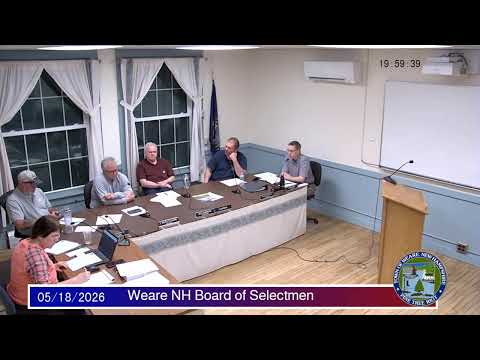
A Weare resident told the Select Board on May 18 that speeding near his home on Dustin Tavern Road is putting his family at risk and urged the town to lower the posted limit.
“I would love it. I just want some accountability for that road,” said Mark Stumpel, who identified himself as living at 221 Dustin Tavern Road. Stumpel told the board his household has four grandchildren and that he has observed repeated passing near his driveway.
Town police and state engineers have reached a different conclusion. A 2024 New Hampshire Department of Transportation speed study, cited by town law enforcement, found that the 50th percentile speed in the area is 41 mph and that the 85th percentile is 46 mph — substantially higher than the posted 35 mph. Based on the engineering data, the DOT advised that a posted limit of 45 mph would better match prevailing traffic speeds.
The board did not make a final change. Members said they would wait for an updated study scheduled for June 5 before deciding. “I would defer this until that study is completed,” a board member said during the meeting, and members agreed to revisit the matter when the new data are available (the chair said results should be ready by June 8 or June 22).
The exchange highlighted the tension between engineering-based speed-setting practices — which typically rely on the 85th‑percentile method — and neighborhood safety concerns. The Select Board instructed staff to place the DOT results on a future agenda once the updated study arrives.