Get Full Government Meeting Transcripts, Videos, & Alerts Forever!
Get email alerts on the Public Safety Surveillance topic
No spam. Unsubscribe anytime.
Green River council debates $111,956 federal grant for license‑plate readers after lengthy public comments
Summary
The council considered a $111,956 State Homeland Security grant to install automated license‑plate readers. Police said the system would be reactive and help locate runaways or wanted vehicles; dozens of residents raised privacy, vendor‑trust and long‑term cost concerns. Council discussion centered on retention, auditing and oversight.
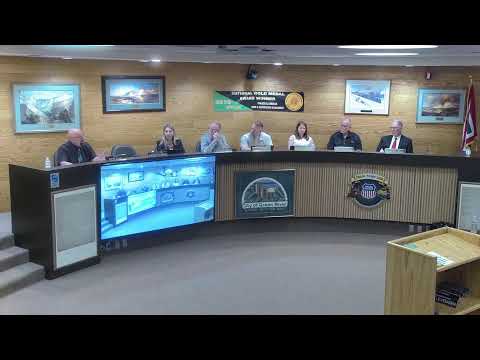
The Green River City Council on an evening docket weighed whether to accept a $111,956 State Homeland Security Program grant to install automated license‑plate readers (ALPRs) at town entry points, prompting an extended public‑comment session and detailed council questioning.
Police Chief Sue (speaker 2) told the council the devices would be used reactively — to detect vehicles already entered into NCIC (the National Crime Information Center) — not for proactive surveillance. “We don't plan on any proactive enforcement with license plate readers,” the chief said, explaining an example in which a vehicle associated with a runaway could be detected the moment it entered town.
More than a dozen residents urged caution or opposed accepting the grant during a sustained public‑comment period. Resident Gregory Sherwin (speaker 8) said he was “frankly appalled” at the idea of installing ALPRs and warned of misidentification risks and private‑company access to data. Dennis Olson (speaker 23) told council members the devices could capture more than plates, citing vendor marketing that references broader vehicle searches by make or model, and asked for details on model capabilities, retention policies and sharing agreements.
Speakers raised recurring concerns about: vendor access and litigation history, long‑term maintenance and software licensing costs after grant funds expire, the potential to reconstruct residents’ movements if retention policies are overly long, and whether Wyoming law provides adequate oversight. Brian Wallace (speaker 21) highlighted that federal grants often cover initial purchase but leave municipalities responsible for ongoing costs; Melody Roberts (speaker 22) called the proposed system “a danger to our freedom.”
Council members pressed the police chief and staff for policy details. The chief said data would be stored in the cloud by the vendor (Motorola) and that the department is drafting a retention and access policy that would include audits; she noted retention would be “less than 30 days” but that the exact number had not been finalized. She also said the system would initially use four cameras placed at ends of town and that in‑car cameras and officer observations remain part of current practice.
Mayor (speaker 1) and several council members acknowledged both the safety arguments and the public's privacy concerns. Council discussion referenced pending litigation in other states involving the same vendor and asked that a detailed policy addressing retention, auditing, access logs, and third‑party sharing be provided before installation.
A council motion was made on the grant during the meeting and seconded. The transcript records extended debate and public comment; the motion text and the grant amount were recorded on the agenda. The transcript does not contain a clearly transcribed roll‑call tally for the final homeland‑security grant motion; minutes should be consulted for the official recorded vote and any policy conditions attached.
Next steps: Council members asked staff to provide a finalized policy (including retention length, search/audit protocols and third‑party data controls) for review before proceeding with purchase and installation decisions. The council also heard a related discussion about long‑term maintenance costs should the city choose to sustain the system after initial grant funding ends.