Get Full Government Meeting Transcripts, Videos, & Alerts Forever!
Get email alerts on the Parking topic
No spam. Unsubscribe anytime.
Sunman council debates parking and vehicle-maintenance rules for town property
Summary
Council members spent an extended session debating a proposed ordinance to ban overnight parking and vehicle maintenance on town-owned property, weighing enforcement challenges, a long-time resident—locked by a water facility, liability concerns and possible waivers; the ordinance was tabled for further research.
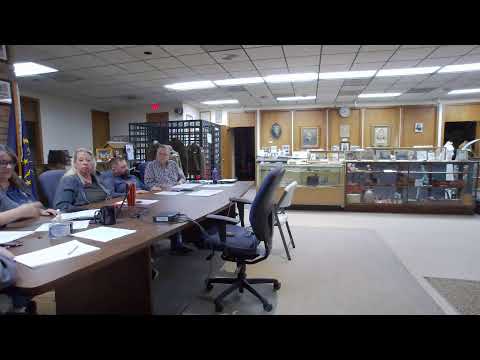
The Sunman Town Council spent a prolonged portion of its February business meeting debating a proposed ordinance to prohibit parking and vehicle maintenance on town-owned property, particularly around the water facility commonly called the water salesman area.
Council Chair (speaker 3) introduced an ordinance to prohibit people from parking long-term or performing vehicle maintenance on town property, saying the measure would help prevent oil and contaminants from being left on town paving and ensure parking access for others. Committee member (speaker 2) and other council members pressed for a clear definition of terms such as "overnight" or how to identify when a vehicle had been stationary long enough to violate the rule.
Marshal (speaker 5) and other participants said they support "zero tolerance" for vehicle maintenance on town property ("You shouldn't be changing oil"), but repeatedly raised concerns about enforcing a blanket no-parking rule where some residents rely on spaces adjacent to the water facility to access their homes. One council member noted a long-time resident who parks next to town property and said that, historically, people have parked there for years; the council acknowledged the complication of residents who are effectively landlocked and the need to avoid placing a single parent or vulnerable resident in a difficult position.
The clerk (speaker 1) said insurance counsel flagged potential liability if town-owned parking were treated as an invitation to park and suggested exploring waivers; council members warned that any waiver approach could create a flood of similar requests. Committee member (speaker 4) asked staff to research how much yellow-curb clearance (statutory or ordinance requirement) is required for driveways and entrances on state routes and for the council to "do the homework" on consistent enforcement. Several members suggested targeted signage or no-parking signs on the south side of the water-salesman area as an interim measure.
After extended debate about fairness, safety and the town's exposure to liability, the council agreed to table the ordinance and directed staff to return with more information about property boundaries, required yellow-curb lengths and ordinance language that would avoid unintended hardship for residents who use the adjacent spaces for essential access.
The discussion closed with agreement on one clear policy point: vehicle maintenance that leaves contaminants on town property is unacceptable and will not be tolerated.
The ordinance remains tabled pending staff research and clearer draft language; council members asked for the item to return to a future agenda once the requested information is available.