Get Full Government Meeting Transcripts, Videos, & Alerts Forever!
Get email alerts on the Prescriptive Easement topic
No spam. Unsubscribe anytime.
Sunman discusses pursuing prescriptive easement to secure downtown sewer main
Summary
At a special April 21 meeting, the Town of Sunman reviewed mapping that suggests a six-inch clay sewer main in the business district serves multiple buildings. Staff advised further jetting, camera inspection, GPS and recorded notice before drafting a prescriptive easement; no formal vote was taken.
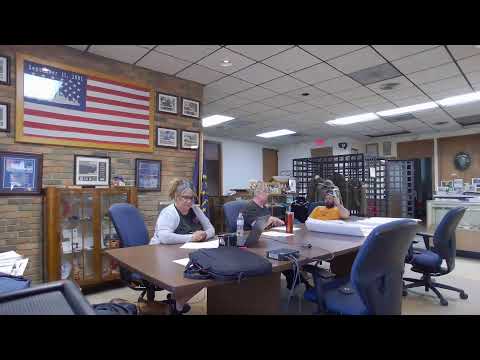
SUNMAN — At a special meeting April 21, town officials discussed whether to pursue a prescriptive easement to formalize municipal access to a sanitary sewer main that runs behind several downtown buildings.
The Chair said the council needs to build "rock-solid proof" before moving forward, including video and GPS records, so any future appeal cannot overturn an easement claim. Staff reported the available map is from 2002 and that a camera inspection and field review found a line behind the business district that staff believe is a six-inch clay main serving multiple buildings.
Staff described the immediate findings: the mapping identifies manholes in the alley (including Manhole 980 and nearby manholes staff labeled 961/981), and a camera run showed multiple taps into the line. "The main that is there is a clay main, which is very old ... that is a 6 inch clay main behind there," a staff member said, noting the map is at least 23 years old. Field staff also reported a grease blockage prevented a full camera inspection in one run.
Council members and staff pressed for clarification about ownership and access. Staff said manhole lids and brand markings on the lids match the town's fixtures but acknowledged there is no definitive recorded paperwork tying the pipes to the town. One council member asked whether property owners could legally dig to tap the line where their property touches it; staff and other participants said property owners can excavate on their land but the lack of a recorded easement makes the town's rights unclear.
Officials agreed on a sequence of verification steps before drafting any legal instrument: jet the line, re-run the camera to locate taps and the grease plug, mark and GPS manholes and laterals, prepare a written description of the route, and then notify recorded property owners and any contract holders. The Chair said the town should put affected owners on notice in writing so future buyers or tenants are informed of the town's claim and the options available.
Participants discussed how many buildings the line serves and whether there are three or four properties involved; staff said a camera run and on-the-ground checks will be needed to confirm which laterals enter the main. Staff offered to consult other maps (including an updated septic map compiled by an "Alliance" contact) and older smoke-test records to further document connections.
No formal motion or vote was taken at the meeting. Staff were tasked to pursue the technical work and return to the council with GPS coordinates, camera footage and a prepared description; if the evidence is sufficient, the council will schedule a meeting to consider recording a prescriptive easement or other legal notice.
What happens next: staff will jet and camera the segment, catalog and GPS manholes and taps, prepare documentation for recording, and send written notices to owners and listed contract holders. The council will reconvene if the evidence supports filing a prescriptive easement or other recorded claim.