Get Full Government Meeting Transcripts, Videos, & Alerts Forever!
Get email alerts on the Environment Conservation topic
No spam. Unsubscribe anytime.
Buck Malik invites public to help remove invasive zebra mussels at Saint Croix River Fest on July 22
Summary
Organizers will bring native freshwater mussels to Hudson’s Lakefront Park on July 22 for volunteers to help remove invasive zebra mussels; presenters described recent conservation successes, a 2025 tributary survey and demonstrations at the festival.
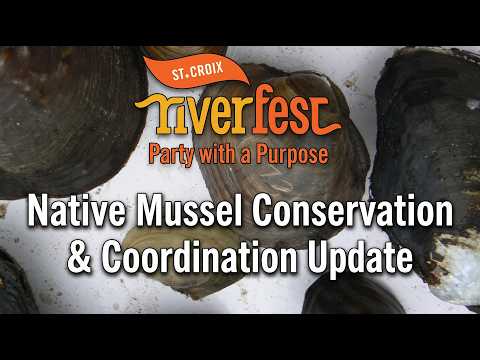
Buck Malik, speaking on behalf of the Saint Croix River Fest, told a local meeting that festival organizers will bring native freshwater mussels to Picnic Point at Hudson’s Lakefront Park on Wednesday, July 22, beginning at about 12:30 p.m., and invite members of the public to help remove attached invasive zebra mussels before divers return the natives to the river.
"This year, for the 1st time, divers are going to bring up some of the native mussels and let us of the public help those mussels by scraping off the zebra mussels," Malik said, narrating slides prepared by Marion Schafer, a National Park Service biologist who will lead the diving event.
The interactive activity is part of Saint Croix River Fest, a free community festival scheduled July 22–25 that will include a morning litter pickup at 10 a.m., a naturalist presentation at lunch, the mussel-cleaning at about 12:30 p.m., and a Minnesota Department of Natural Resources electrofishing demonstration from 2 p.m. to 4 p.m., Malik said. He directed listeners to saintcroixriverfest.org for schedule updates and weather-related changes.
Organizers framed the volunteer activity as both an educational opportunity and a conservation action. Malik described freshwater mussels as important ecosystem engineers: "Freshwater mussels are bivalve mollusks, and they play an important role in healthy river system," he said, explaining that mussels filter tiny particles from the water, improve clarity, stabilize river bottoms and create habitat for other aquatic life.
Malik emphasized regional conservation work: the Saint Croix system supports about 41 native mussel species, including five species listed as federally endangered. He highlighted recent restoration milestones, including a first-time propagation success for the winged mapleleaf — work that involved host-fish research (notably channel catfish tracking), overwintering techniques in "silos," and multiagency partner efforts to rear juveniles until they can be returned to the river.
Speakers also summarized a 2025 mussel survey of the Namakaugan River, a major tributary. Malik said the survey used snorkeling reconnaissance, scuba transects and quadrats and documented 18 mussel species; the teams reported a new river record for the so-called lake floater, allowing comparison with historical 1988 data and helping establish long-term monitoring sites.
Malik said field crews and volunteers routinely handle mussels by placing them temporarily in aerated live boxes while technicians and trained divers remove invasive zebra mussels, count and age specimens, and return the natives to appropriate parts of the river. He noted that some restoration sites, such as Hudson Narrow, are used to collect brood stock and support grow-out efforts for endangered species including spectaclecase, winged mapleleaf and Higgins eye.
The presentation also flagged potential interactions between river recreation (camping, tubing, canoeing) and mussel beds; Malik said ongoing monitoring will help determine whether visitor-use practices need management changes to protect sensitive sites.
Malik closed by thanking Marion Schafer for the slides and inviting the public to the festival activities starting July 22. "Everything is free unless you choose to buy food or something," he said.
The festival schedule and any last-minute changes are posted at saintcroixriverfest.org.