Get Full Government Meeting Transcripts, Videos, & Alerts Forever!
Get email alerts on the Cemetery Services topic
No spam. Unsubscribe anytime.
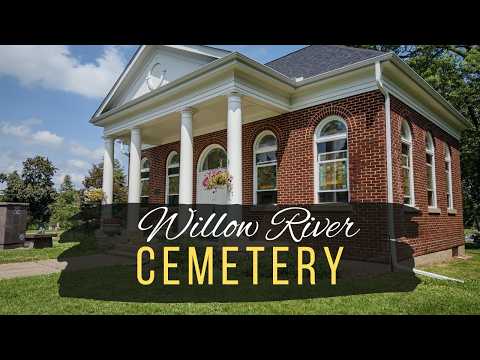
Longtime caretaker outlines Willow River Cemetery’s history, services and capacity
Summary
Mike Miller, Willow River Cemetery’s longtime caretaker, described the site’s 1850 founding, its nonprofit funding model, a shift toward cremation ("nearly 80%" of interments), mixed-burial options, and an estimated 1,600 future burial sites available on the west side and wooded area.
Mike Miller, longtime caretaker of Willow River Cemetery in Hudson, said the site began in 1850 and remains a nonprofit supported by grave sales, burial fees and donations. "The cemetery started in 1850," Miller said, describing an original nucleus in the "old cemetery" that expanded north, then south and back toward the west side of 9th Street over time.
Miller told listeners on Western Wisconsin Journal that Willow River was originally plotted for casket burials and later adapted as vaults and cremation became more common. "Cremation burials... are at, nearly 80%," he said, describing how the cemetery now offers both in-ground cremation plots and above-ground columbarium spaces for urns.
The cemetery maintains distinct sections for different burial types, Miller said. He identified a "corner section" at 9th and Wisconsin for in-ground cremations designed for two people per site, and said many traditional plots can accommodate one casket burial plus up to four cremations, allowing families to mix choices according to preference.
Miller, who said he has served as caretaker since 1991, outlined how the cemetery handles both immediate burials and preplanning. When funeral homes notify the cemetery after a death, Miller said he meets families, shows available sections and focuses first on placing people where they feel comfortable, with financial details handled later. For preplanning, appointments allow more time to review options; Miller advises families to take time to decide.
On maintenance and decorations, Miller said Willow River is "pretty wide open" compared with some cemeteries: solar lights and other personal items are commonly allowed as long as they do not interfere with neighboring plots and are kept reasonably maintained. He contrasted that with earlier, stricter seasonal restrictions that the cemetery no longer enforces.
Miller encouraged community support for the nonprofit, directing donations to Willow River Cemetery or the Friends of Willow River Cemetery and offering a website for information: willowrivercemetery.com. He also provided an office address, 815 Wisconsin Street in Hudson, and said payments are currently handled by cash or check.
Regarding future capacity, Miller estimated the West Side of 9th Street has about "800 sites" and the adjacent wooded area could provide roughly another 800 sites, and noted that columbariums make additional interment options flexible. He stressed those figures as approximate when discussing long-term planning.
The radio segment closed with host Kendra Grama thanking Miller for his years of service and noting the cemetery’s role in community life. No formal actions or votes were recorded during the interview; the segment was informational.