Get Full Government Meeting Transcripts, Videos, & Alerts Forever!
Get email alerts on the Zoning Rezone topic
No spam. Unsubscribe anytime.
Rezoning request to C3 near Yellowstone Highway tabled after concerns over noise and buffering
Summary
A proposed zoning map amendment to change several parcels from C1 to C3 was tabled after lengthy discussion and public comment about potential light‑manufacturing uses, outdoor storage, noise impacts, and the adequacy of screening for adjacent residential areas.
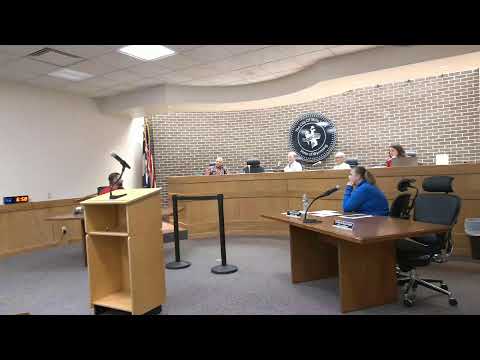
The Mills Planning and Zoning Commission voted to table a zoning map amendment request from DeBoer Limited that would change several parcels near Wyoming Boulevard and West Yellowstone Highway from C1 (neighborhood commercial) to C3 (business service).
Nat Steinhoff, the applicant’s representative, said the C3 designation would restore a historic pattern of uses and make the site marketable for prospective tenants that could not operate under C1. “We want to see a thriving business on one of Mills’ most prominent corners,” Steinhoff said, describing potential light‑manufacturing and business‑service users who had been discouraged by the existing zoning constraints.
Commissioners and several members of the public raised concerns that the C3 designation explicitly allows light‑manufacturing uses and may permit outdoor storage and operations that would be visible or audible to adjacent mobile‑home parks and single‑family residences. Commissioners focused on three main issues: whether existing code allows strong, enforceable buffering between commercial and residential parcels; how noise is measured and enforced; and whether rezoning is the right time to add code protections.
Planning staff pointed to existing code language: a high buffer standard requires a 10‑foot landscape strip with a six‑foot solid screen or wall adjacent to residential uses, and the noise ordinance uses a practical test—sound audible more than 30 feet from the source is evidence of a violation. Staff also emphasized that zone change is an expansion of allowed uses and that site‑plan review or zoning certificates would typically address specific screening and operational conditions.
Some commissioners urged the commission to develop suggested code amendments or stipulations for city council to consider alongside the rezoning; others warned that conditions attached to a site plan are not equivalent to the broader effects of a zoning map amendment. After extended deliberation, the chair moved to table the application to allow the commission to explore potential code language and buffering options and to prepare recommendations for council. The motion to table carried by voice vote.
The applicant may return with additional information or the commission may forward recommendations to City Council during the ordinance reading process; the rezoning request requires three council readings for final action.