Get Full Government Meeting Transcripts, Videos, & Alerts Forever!
Get email alerts on the Snakehead Eradication topic
No spam. Unsubscribe anytime.
Fish and Wildlife says rotenone treatment and surveys removed 671 northern snakeheads from Archway Lake project area
Summary
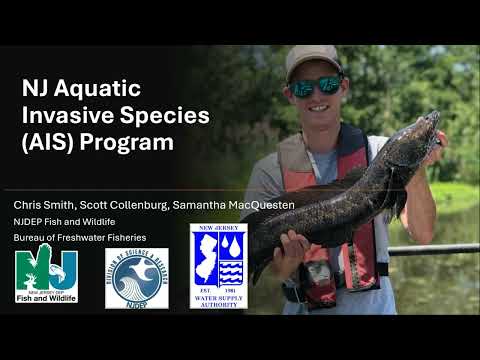
Staff described an Archway Lake rapid response project that combined electrofishing, eDNA sampling and a rotenone treatment; Fish and Wildlife removed 671 northern snakeheads in total (545 pre-treatment plus 126 during treatment), obtained permits, coordinated with New York DEC, and plan to restock once monitoring confirms clearance.
Fish and Wildlife staff described a rapid‑response project in the Upper Mullica River watershed focused on Archway Lake, where a July 16 public report and subsequent surveys identified a reproducing population of northern snakeheads. Samantha Queston and Chris Smith outlined the multi‑step response that included electrofishing, eDNA testing, permitting, and a rotenone treatment conducted after permits and conditions were met.
Queston said staff collected baseline seine and electrofishing data, removing snakeheads during months of surveying. She reported a pretreatment total of 545 snakeheads collected after an additional electrofishing trip yielded 82 more, and that 126 snakeheads were removed during the rotenone treatment, bringing the project total to 671. "So a 126 more snakeheads were removed during the treatment, which brings our grand total to 671 northern snakeheads for the whole project," Queston said.
Staff said the project required securing pesticides permits and permit conditions that included licensed applicators, respirator training for staff, reciprocity with New York Department of Environmental Conservation, and special authorization from the Pinelands Commission for the discharge and neutralization plan. The agency described the neutralization step, which used a potassium permanganate drip at the outflow to prevent treated water from leaving the permitted project area, and a post‑treatment salvage and species quantification effort required by permit conditions.
Queston said the NJDEP Office of Natural Resource Restoration provided funding for the project and that coordination with New York DEC was essential. She and Chris Smith said staff salvaged and cataloged fish during cleanup, collected scale samples for age analysis, and plan to continue electrofishing and eDNA monitoring until they are confident no viable snakehead population remains; restocking will follow when safe. Staff also said evidence from eDNA and electrofishing suggested the initial introduction into Archway Lake was intentional and illegal, a claim the agency reported to investigators but which the presentation did not independently verify.
The case study highlights tradeoffs and operational hurdles for rapid responses: permit acquisition, sourcing rotenone product after a production pause, specialized equipment and trained staff, and the logistical work of neutralization, salvage and planned restocking.