Get Full Government Meeting Transcripts, Videos, & Alerts Forever!
Get email alerts on the Ais Management Plan topic
No spam. Unsubscribe anytime.
New Jersey launches AIS management plan implementation and public reporting form; 136 reports received in 2025
Summary
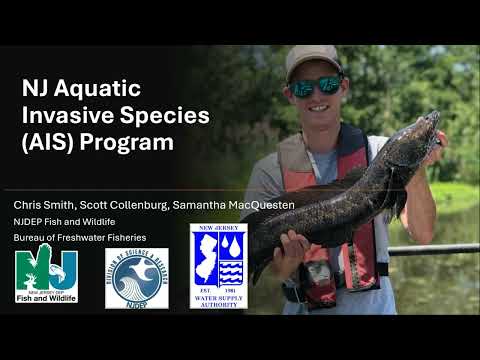
Samantha Queston, the state's new aquatic invasive species coordinator, described year‑one implementation of New Jersey's AIS management plan, the launch of an online reporting form on 2025-06-18, formation of five workgroups and 136 public submissions covering fish, plants, invertebrates, reptiles and one amphibian.
Samantha Queston, New Jersey’s aquatic invasive species (AIS) coordinator and database manager, outlined the department’s year‑one progress implementing its AIS management plan and the new public reporting system.
Queston said the reporting form and database were launched on 2025-06-18 and are intended to help Fish and Wildlife locate, verify and manage AIS across the state. "During the remainder of 2025, we received 136 reports from the public," Queston said, and she provided a breakdown: 36 fish reports, 44 plant reports, 19 invertebrates, 36 reptiles and 1 amphibian. Photographs are required to allow taxonomic verification by experts, she added.
Queston described five initial work groups to implement priority actions in appendix G of the management plan: species categorization, prioritization, education and outreach, invasive species protection zones, and rapid response. Each group will target ranked actions from the plan; for example, the species categorization group will update the state’s nonnative aquatic species list with new distribution and impact data, while the rapid response group will draft and test a statewide AIS rapid response protocol.
Queston emphasized that establishing a stable funding pathway for long‑term implementation is the plan’s most important task. She also said the reporting dashboard can be switched from public submissions to an internal view that includes agency data, and credited GIS staff in the Office of Information Systems for building the mapping and form tools.
The department invited attendees to scan a QR code shown during the presentation to access the reporting form and said the recorded presentation and supporting materials will be posted on the Fish and Wildlife website.