Get Full Government Meeting Transcripts, Videos, & Alerts Forever!
Get email alerts on the Hatchery Production topic
No spam. Unsubscribe anytime.
Pequest reports 614,490 trout stocked in 2025; DEP funds hatchery modernization study
Summary
Pequest Hatchery managers reported they stocked about 614,490 rainbow trout in New Jersey public waters in 2025 and said the DEP has secured funding for a study to modernize the Pequest and Hackettstown hatcheries, with a study expected to take roughly a year.
Pequest Trout Hatchery officials provided production figures for 2025 and described the first step in a funded plan to modernize state hatcheries.
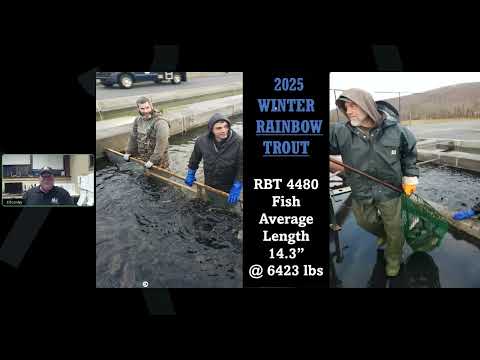
Ed Conley, superintendent of Pequest Trout Hatchery, told attendees the hatchery collected approximately 1,700,000 rainbow trout eggs from 594 three‑year‑old brood females last fall, reared fish through nursery and raceway stages, and delivered a total of about 614,490 rainbow trout to New Jersey public waters in 2025, which he estimated weighed roughly 373,469 pounds.
Conley said spring preseason stocking will begin March 23, 2026, with a preseason allocation of about 188,640 fish slated for release prior to opening day and the remainder distributed during a seven‑week in‑season program leading to opening day on April 11, 2026. Fall stocking will begin Oct. 13, 2026, and the department expects to combine what had been separate fall and winter programs into a single fall program to improve angling opportunity.
Kristen Maestrelle, assistant director, said the department has secured funding to commission outside consultants to assess Pequest and Hackettstown hatcheries and produce a roadmap for renovating facilities to improve efficiencies, biosecurity and species‑production options. Maestrelle said the funded study should take about a year; design and construction would follow and could take additional years as state processes and engineering proceed.
On species, Conley and other staff said they are exploring ways to reintroduce brown trout into the stocking program but cautioned that it is unlikely to occur in the current year; staff said they hope to have more information as the hatchery modernization work proceeds.
Why it matters: the production numbers set the baseline for statewide stocking allocations and the funded modernization study signals a multiyear, agency‑led effort to update aging infrastructure and potentially increase the variety of fish produced in state hatcheries.
Conley closed by urging anglers to buy 2026 fishing licenses and consult the Freshwater Fishing Digest and agency apps for details about stocking dates and water‑body regulations.