Get Full Government Meeting Transcripts, Videos, & Alerts Forever!
Get email alerts on the Short Term Rentals topic
No spam. Unsubscribe anytime.
Clackamas County moves short‑term rental code amendments to second hearing after lengthy public comment
Summary
After hours of public testimony from hosts and residents, the Clackamas County Board of Commissioners advanced proposed short‑term rental code amendments—adding land‑use checks, enforcement tools and a fee increase estimated to raise about $558,100 for staffing—to a second hearing scheduled for June 25.
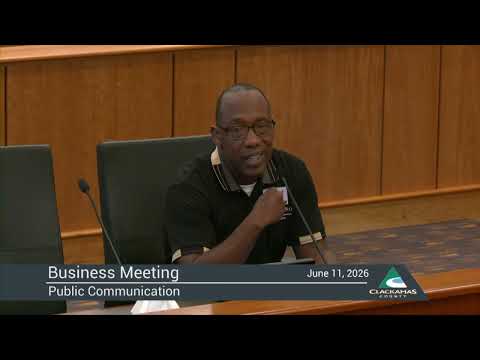
The Clackamas County Board of Commissioners advanced proposed amendments to the county's short‑term rental code on a 4–0 vote at a June 11 business meeting after a lengthy public hearing that drew dozens of speakers.
Staff presented revisions intended to strengthen enforcement and fund program staffing. Assistant County Counsel Jeff Muns told the board the package would require a land‑use compatibility statement for STR applicants, expand the county's ability to issue citations and bring enforcement cases to a hearings officer, and increase permit/registration fee revenue to support two program positions. Staff provided an estimate that the fee changes would generate approximately $558,100 to cover program staffing and administration.
Why it matters: The draft is intended to address neighbor complaints about noise, trash, parking and parties, while creating a permanent county program to replace a long-running pilot. Proponents say the rules will give the county tools to hold problem properties accountable; some hosts and small‑business owners say the proposal could unduly burden compliant, family‑scale operators.
Public comment was sharply divided. Peggy Holyoke, who described herself as a host and longtime local resident, said she and other compliant hosts support sensible rules and help fund emergency services: “We’ve paid over $12,000 in transient lodging taxes already to support emergency services,” Holyoke said. Ian McCluskey, a Mount Hood owner‑operator, urged the board to distinguish property types and not treat a small historic cabin the same as a large rental that attracts many cars and guests: “If a property has demonstrated years of compliance, non‑expiring use should be grandfathered in,” he said. Several residents, including Michelle Richardson and Richard Carlson of local homeowners associations, pressed for clearer limits on occupancy and parking and asked that penalties be enforced primarily against owners when appropriate.
Staff and commissioners clarified several points. Muns said the transient lodging tax (a state requirement) is separate from the county’s proposed registration and enforcement fee and that the draft program’s percentage fee is meant to fund enforcement and operations rather than tourism promotion. He also explained that noise enforcement remains a sheriff’s office function but that noise violations would also be violations of the STR chapter and could result in conditions imposed by a hearings officer (for example, occupancy monitoring) to address chronic problem properties.
The board voted 4–0 to read the ordinance by title only. The clerk read Ordinance 07‑2026, described in the meeting as "an ordinance adopting Clackamas County code chapter 8.1, short term rentals, and declaring an emergency." There was an initial confusion about the date for the next hearing; the clerk later corrected the record that the second reading/public hearing is scheduled for Thursday, June 25.
What’s next: The board set a second hearing/reading for late June to consider adoption and additional public comment. Staff materials and the ordinance text accompanying the agenda contain more detail on fee mechanics, exemption categories and proposed fine schedules; staff told the board fines and penalties would be set as part of a fine schedule tied to the code and reviewed by the hearings officer process.
The hearing made clear strong local disagreement about how to balance neighborhood livability and small‑scale host economics; commissioners said the code will continue to be refined and that they expect to monitor program metrics and consider adjustments after the program is in operation.