Get Full Government Meeting Transcripts, Videos, & Alerts Forever!
Get email alerts on the Corrections topic
No spam. Unsubscribe anytime.
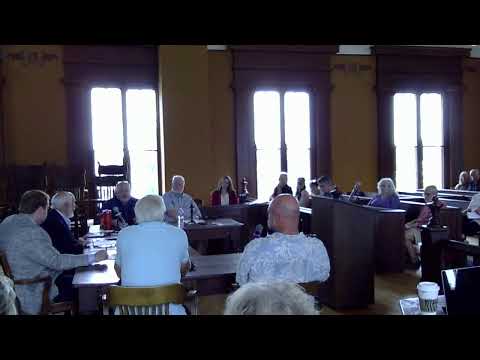
Lapeer County panel approves continuing purchases of injectable opioid treatment for jail, amid debate over cost and approach
Summary
County officials agreed to continue procuring monthly injectable medication for inmates as part of a treatment program funded from opioid-settlement money, after deputies described one-shot, 28-day dosing and asked for authority to purchase additional doses; commissioners pressed for clarity on costs, long-term funding and alternatives.
Lieutenant Beebe of the sheriff’s department told the board that the county’s jail has begun using long-acting injectable medication for inmates with opioid use disorder and asked the commission to allow continuing purchases to ensure supply.
"It's one shot for 28 days," Lieutenant Beebe said when describing the injectable regimen used in custody. He told commissioners the county had purchased 10 injections and needs additional doses, and asked for authority to purchase up to 50 injections over time so the jail can meet anticipated needs without supply gaps.
Beebe said the county has approximately $1.4 million in opioid-settlement funds that will be disbursed over 18 years and that only a small portion of that total has been spent to date. He described three priority line items the task force established for settlement allocations—detox, injectables, and aftercare—and said committee members reallocated funds to cover imminent injection orders.
Commissioners pressed Beebe on clinical alternatives and long-term cost. One commissioner noted oral medications are considerably less expensive but can be diverted or require daily supervision; Beebe said an injection cannot be diverted in custody. The exchange also covered how inmates who were already receiving community prescriptions are coordinated with Community Mental Health (CMH) at discharge.
The board verbally recorded support for the motions on the table after extended discussion. The transcript contains inconsistent figures for unit cost: at one point a figure of $15.52 per injection was mentioned, while elsewhere the discussion referenced a discounted unit price in the low thousands and a regular price near $2,100. Commissioners and sheriff's staff said they are pursuing grant funding and alternative suppliers; officials also noted generic competitors are expected in coming years.
The board’s action: commissioners moved the agenda motions related to the program and voiced assent during the vote. The transcript does not include a roll-call breakdown or an explicit line-item appropriation in the public record; officials said invoices will be charged to designated settlement line items and that staff are exploring additional grants.
The next step: staff will supply more detailed cost breakdowns and updates on grant applications and procurement options at a future meeting.